

Just like last week, I posted the transcript of the most recent Football Film Room podcast below and included clips of the plays I talked about in the episode.
Feel free to read the transcript on it’s own or use it (and the plays I included) to follow along with the podcast to get more context for what I’m talking about.
In this episode, I discuss:
Some of the all-time great quarterbacks (and their prickly exchanges with teammates and coaches)
Aaron Rodgers as a field general
How the Steelers Offense did things they hadn’t all season vs. the Ravens
Analysis of the Ravens’ big plays on offense
John Harbaugh’s future (prior to his firing)
The Seahawks defense
The Sam Darnold variable
Here is a direct link to the podcast, and below that you can find the transcript and plays:
The Football Film Room Show - Episode #15

In episode #15 of The Football Film Room Show, I talk about how Aaron Rodgers and some of the all-time greats like Tom Brady, Peyton Manning, Johnny Unitas (and others) are cut from the same cloth.
The Football Film Room Show - Episode #15 Transcript
Welcome to the Football Film Room Show. I’m Nick Kehoe. We’ve got another great episode for you today.
We’re going to get into that Ravens-Steelers game. Just an absolutely phenomenal way to end the NFL regular season. Crazy finish to that game. Four lead changes in the fourth quarter alone. Two missed kicks in the final minute. Unbelievable finish. Some unbelievable performances.
We’re going to talk about the 49ers and Seahawks. The ramifications from that game.
But before we do any of that, I want you to think back to some of the all-time great quarterbacks in NFL history.
All-Time Field Generals
Tom Brady, Peyton Manning, Joe Montana, Terry Bradshaw, Johnny Unitas, Elway, Marino, Brett Favre.
Every single one of those quarterbacks had something in common.
Now they all played differently. They all won with different tools. Some had great arms, powerful arms. Some were more accurate than others. Some won with their coverage recognition, their ability to understand and dissect what a defense is doing. Some used their legs.
But every single one of them was in charge. Every single one of them was, for lack of a better term, a field general when playing the position.
Now that’s an overused term, but it really does apply. The all-time great quarterbacks... They’re in charge. When they’re out on the field, it’s their huddle. Whether they’re calling the plays or they have the ability to change the play at the line of scrimmage, it’s on them.
And contrary to what you’ve been told by Hollywood, the quarterback is not everybody’s best friend…nice to everybody. No, no, no, no, no, no, no, no. Most of the great quarterbacks have a lot of MF-er in them. Rhymes with brother-tucker.
In fact, Dan Fouts, another all-time great, Chargers quarterback, he used to wear a hat around the facility that said MFIC. Stands for MF-er in charge.
And you can look back through a lot of the old NFL films footage, see wires of some of these quarterbacks, see what types of personalities they had, how they carried themselves on the sideline. These guys were not afraid to get into each other’s faces, to yell at another player to hold them accountable.
The most famous clip is probably Peyton Manning. Back in the 2005 season, he was wired. Got into a shouting match with his center, Jeff Saturday, who was like his best friend. Came over to the sideline. I think he heard that Saturday was complaining that they weren’t running the ball enough in the red zone.
It’s a great clip. You can just see Peyton Manning. He’s sitting on one bench. He’s listening in to Jeff Saturday, who’s sitting on another bench, talking to his other offensive linemen, saying, we need to run the ball. He’s just seething. Finally, he gets up and gets in Saturday’s face, says, hey, quit calling the plays! I’ll call the plays! I call a run play, you block! I call a pass play, you block!
And then another offensive lineman has to get in his way. It was during a game when the Colts, I think, blew out another team, and they were still at each other’s throats because they demanded perfection.
Shoot, Tom Brady. You’ve seen Tom Brady get into it on the sideline with his coaches. Bill O’Brien back in 2011, they got into a huge shouting match. Josh McDaniels several years later.
Johnny Unitas is another great example. There was a game back in 1970, the year the Baltimore Colts actually won the Super Bowl, where head coach Don McCafferty told Unitas in a specific situation, hey, whatever you do, do not throw the ball.
And what did Unitas do? He called a pass play, threw it, and the Colts scored a touchdown:
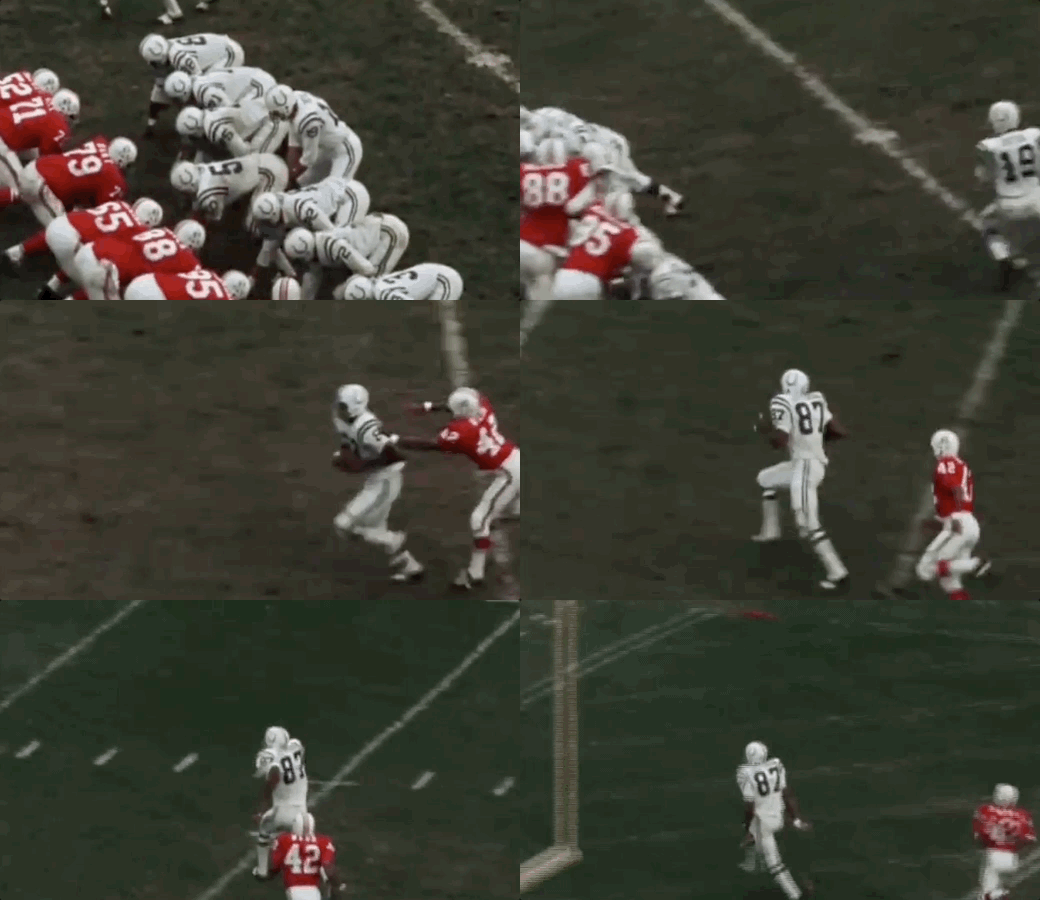
Go back and watch that 1970 America’s Game because Ernie Accorsi tells that story. He was there with the team then when Unitas was there. Talks about how that was just John.
What he meant by that was Unitas was going to do what he was going to do because he was in charge.
Aaron Rodgers is Cut from the Same Cloth
Aaron Rodgers is that type of quarterback. He’s one of the few who still remains and plays that way. But he’s in command at the line of scrimmage.
You saw a couple weeks ago the NFL Films clip of him telling Kenny Gainwell in the middle of a play, hey, motion all the way out to the sideline and run a go route. And it happened to be the play where Gainwell made this miraculous catch and went into the end zone for a touchdown:
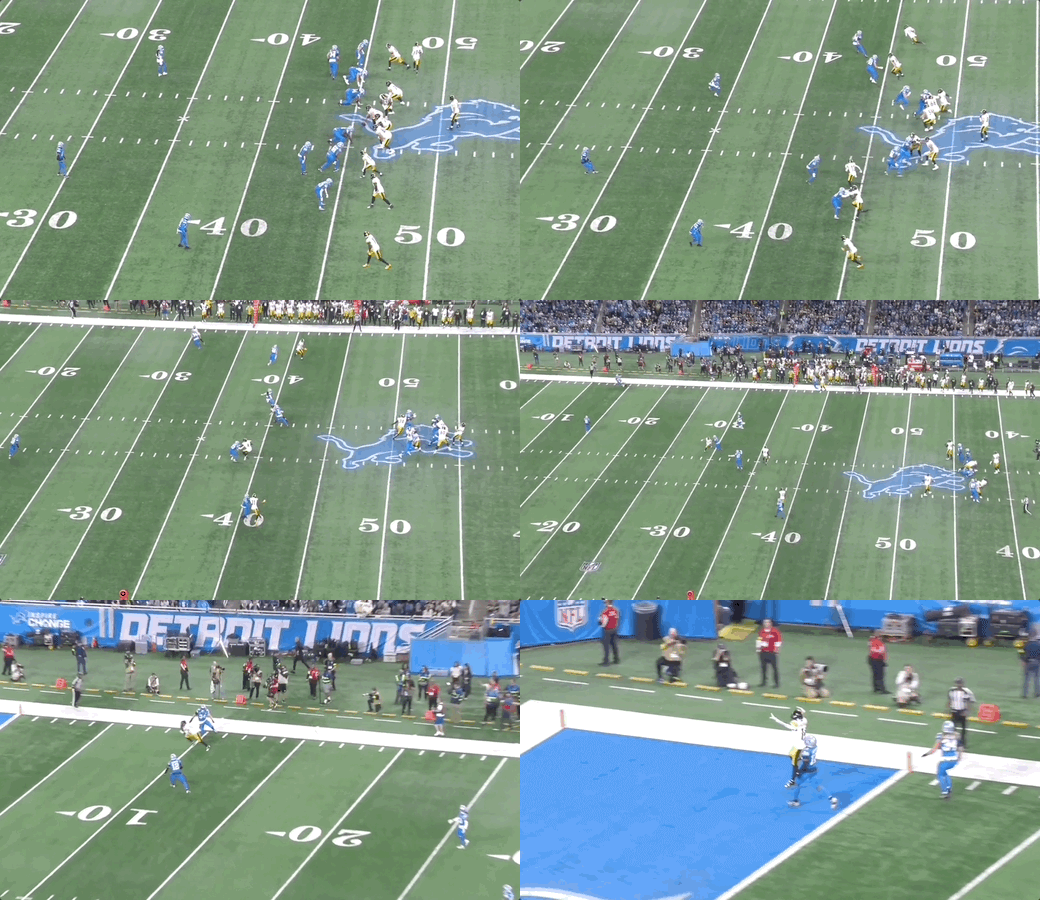
But Rodgers is constantly... constantly working with, and it seems like yelling at all the time, his teammates. And he’s not doing it to be a jerk. He’s not yelling at them because he’s blaming them for anything.
It’s because he holds himself to a high standard. And for him to play well, he needs other players to meet that standard. You don’t always get there by being nice to everybody in the heat of the moment.
But he cares about the details. He needs everyone else to be as detail-oriented as he is. And he probably gets frustrated because he’s in his 21st year. He sees the game so much quicker than everyone else does. He’s seen every defense there is, and other players don’t quite see it the way he does.
So I’m sure that frustration comes out, but it’s critical to the way he plays.
And that’s why you see him kind of having different favorite receivers that...you wouldn’t think would be his favorite. That’s why Allen Lazard had such a good connection with him, both in Green Bay and with the Jets, why he targeted him. Because he clearly trusted that Lazard would be where he needed to be at the time that Rodgers needed him to be there:
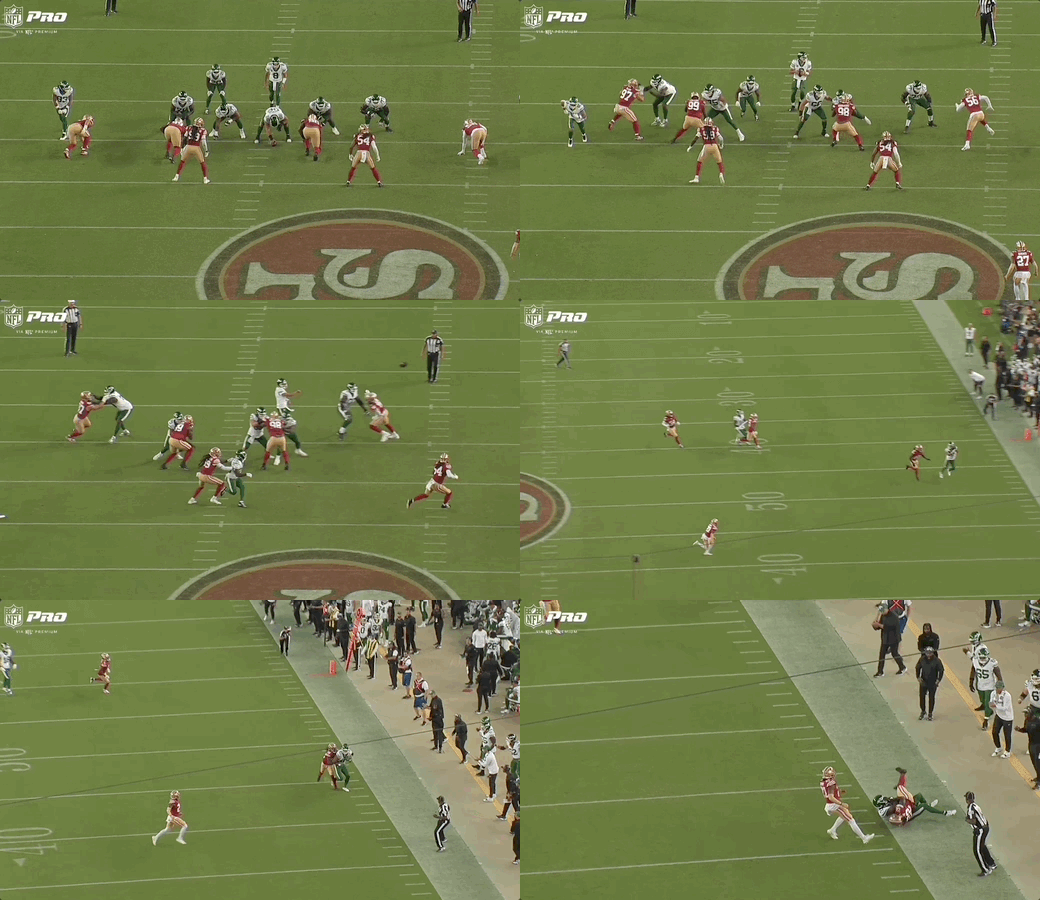
That’s why he wanted Randall Cobb to come back to Green Bay after he had left the team several years earlier. That’s why he wanted to bring Randall Cobb to the Jets, so he could have a receiver who would be where Rodgers knew he was going to be when he needed him to be there. Same as Lazard.
And it’s probably why he and Garrett Wilson were never able to have that great connection. Because Garrett Wilson, by his own admission, by the admission of everyone around the Jets, is a little bit more of a freelance route runner. He doesn’t just take three steps and cut all the time. Sometimes he’ll take an extra step to get open:
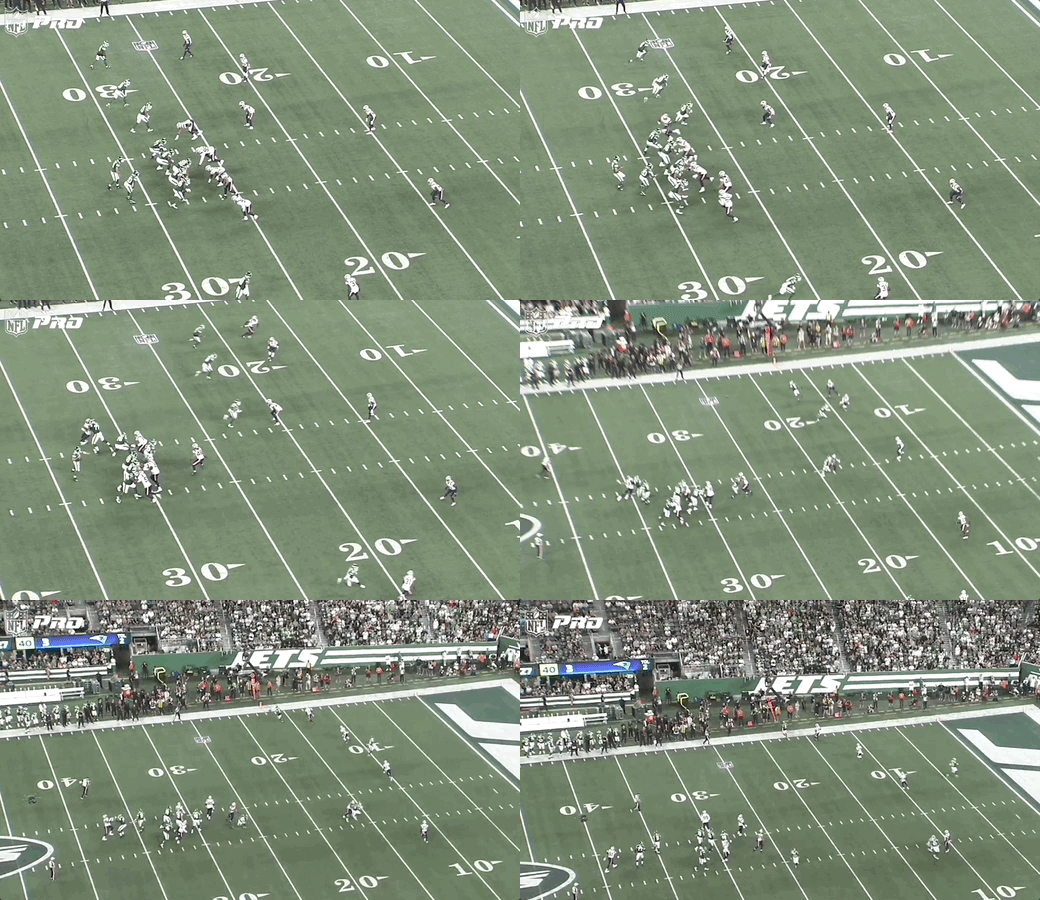
And if Rodgers happens to be looking his way and he hasn’t come out of his break when he expects him to, he looks off. And you do that enough, eventually he’s going to stop looking your way. That’s just the bottom line.
Why the Steelers Passing Game Finally Looked Good
But after the game on Sunday night, Rodgers spoke a little bit about how some of the things that they’ve just been talking about all year and been waiting to get to, things they’ve been discussing since they were in training camp in Latrobe, how they finally kind of came to fruition in the game last night.
They came in some critical moments, too. And to me, this was really why the Steelers were able to pull this one out against the Ravens on Sunday night, because they were able to do things that they really hadn’t been doing well all season. I don’t know if you’d say it finally clicked, but they finally executed.
They attacked the middle of the field. They had to do that. They didn’t have DK Metcalf, but they attacked the middle of the field and they had success:
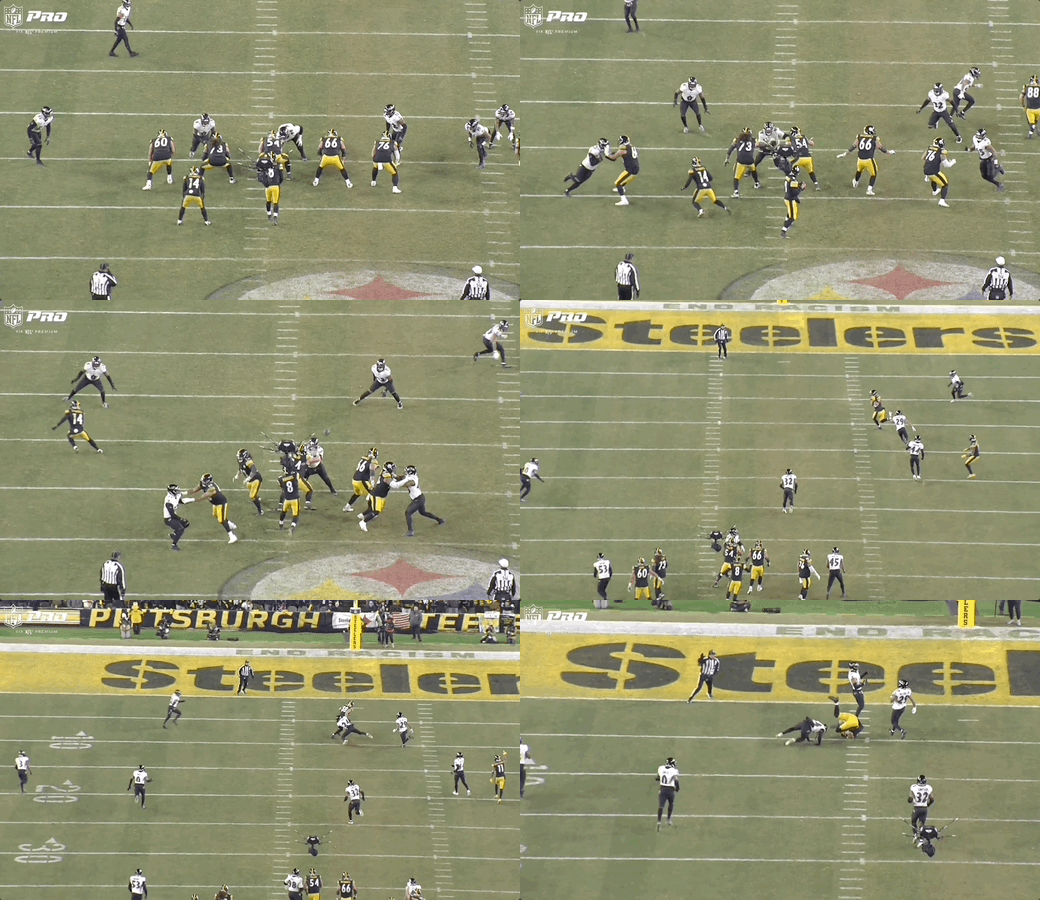
Rodgers attacked downfield. He wasn’t just looking to get rid of the ball quickly all the time.
The biggest thing the Steelers did was convert on third and long. Entering Sunday, their offense was 26th in the NFL on third and long. That’s third and seven yards or more. They converted just 20% of the time.
You know what they did against the Ravens? They converted on 6 of 9 third and long attempts, including 4 of 5 in the second half. And arguably the three biggest plays of the game for the Steelers offense came on these third and long plays.
And these were the plays where, as Rodgers said, the details they’ve been working on all season, everyone was finally on top of them.
There was a third and ten at the start of the second half. This was the Steelers’ first possession out of the locker room. They trailed 10-3, and they just come off a real downer of a moment at the end of the first half where they finally seemed to be moving the ball well. They got down to the goal line, and on the final play of the half, it wasn’t a great play call. I liked the decision to go for it, but it wasn’t a great play call. They got stopped at the goal line, came away with no points, and they could have just folded.
And if they had to punt the ball on that first drive, give it back to Baltimore, may have been a big momentum swing. But instead, on this 3rd-and-10, as Rodgers described it, the Ravens brought a strong dog with the middle linebacker and the slot corner, Marlon Humphrey, blitzing.
And he wanted Freiermuth to run a vertical on this play. Freiermuth was to the right, to the side of the blitz. And he spotted the blitz. He recognized it. He ran vertical like Rodgers wanted him to. And he widened his route like Rodgers wanted him to to give him more room from the closing defender coming from the other side of the field:
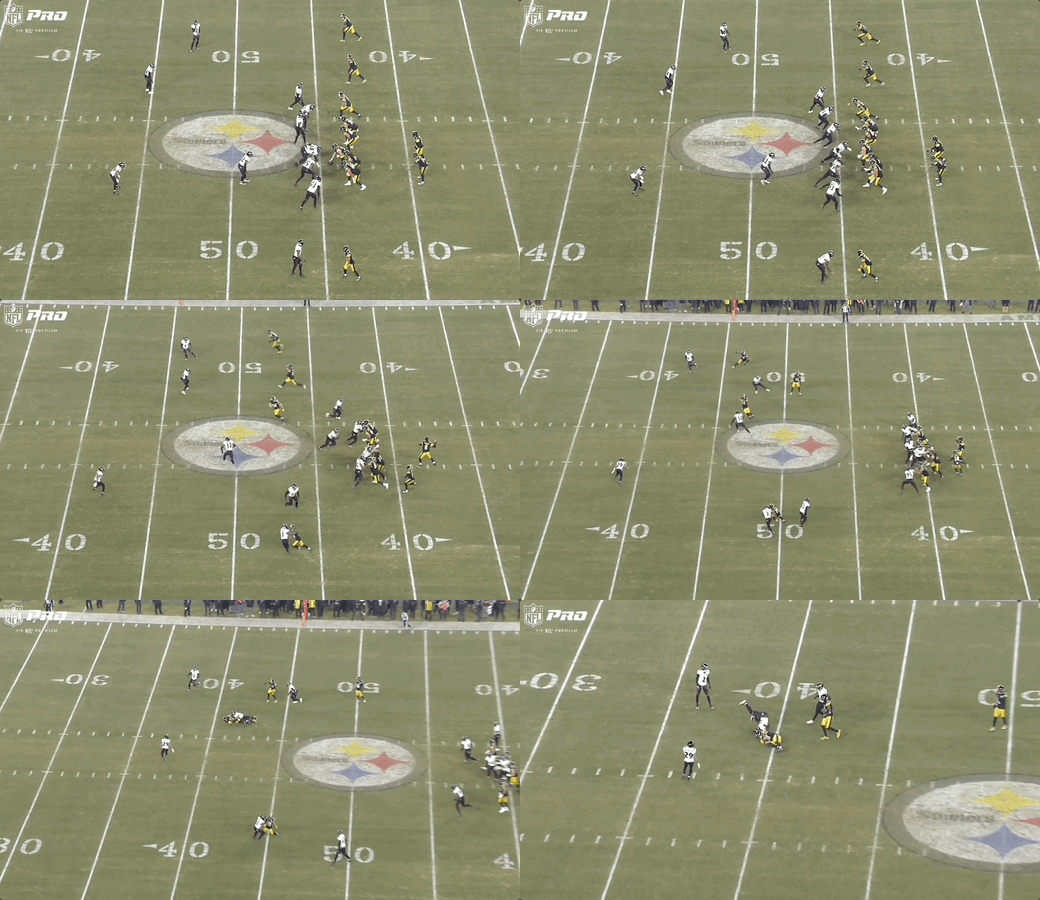
I wrote about this on FootballFilmRoom.com using Rodgers’ words to diagram the plays.
But that led to a big first down. And the Steelers, they stayed on the field. They kept the momentum of their offense going. The passing game really got going at that point. And then a few plays later, they were in the end zone, tied the score at 10, brand new ball game.
The next big play to Freiermuth came with about six minutes left. The Steelers trailing 17-13, needed a touchdown. This was a 3rd-and-8 inside the Ravens’ 40. And according to Rodgers, it was another example of Freiermuth doing something they had been talking about. He would end up running a stick nod. A route where he’s lined up close to the formation. He runs up, acts like he’s going to break to the outside, run a little seven-yard out route or so, gets his defender to bite, and then cuts it upfield:
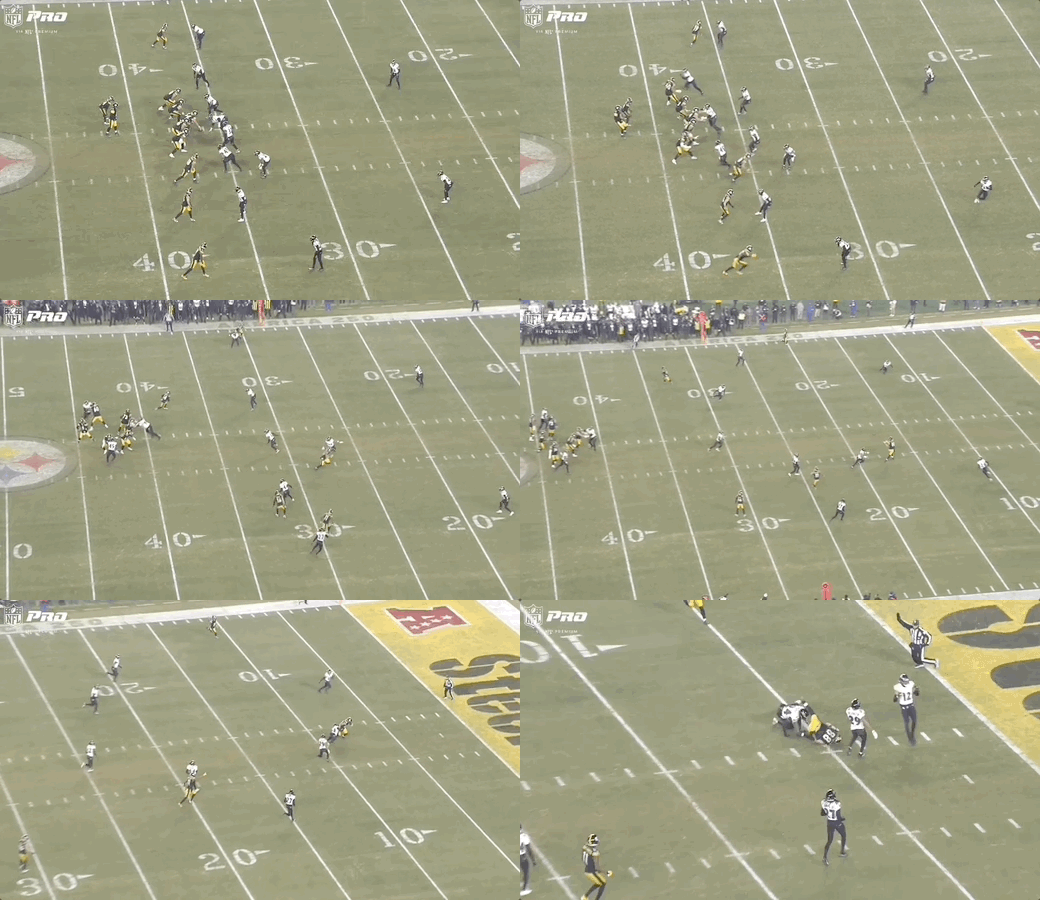
But Rodgers talked about how this was a route that when he sees the coverage the way that the Ravens were playing it, be patient with the route. And Freiermuth was, got his defender to bite. Rodgers delivered an absolute seed to him.
And it was a play where if you go back and look at it, Rodgers was getting rid of the ball before Freiermuth was out of his break. And again, after the fact, after when you look at it in the broadcast, it looks like it’s wide open. But the play’s not there or Rodgers isn’t hitting Freiermuth in the exact same way if he doesn’t run that route exactly as he’s expecting him to. Because again, he got rid of the ball before Freiermuth was out of his break.
And then the final big play, what ended up being the game-winning touchdown, came with about a minute left. Again, it was another third down, third and long, 3rd-and-10 this time. Steelers needed a touchdown. Were down 24-20. And this was another one of those plays where Rodgers kind of drew it up in the huddle. Had Calvin Austin run a hitch and go to the backside of a three-by-one formation.
And that’s, again, that’s kind of the way that Rodgers plays. He wants to have his three-man concept to one side. He wants to have his 1-on-1 to the other side. In general, he wants to be able to find 1-on-1’s.
And if he has one, he knows he’s got the accuracy and the ability to put the ball wherever he wants to, but needs his receivers to be on the same page.
Calvin Austin ran a great hitch and go. His defender slipped in response to it. Ended up being the gimme touchdown because it was such a good route and because the defender slipped:
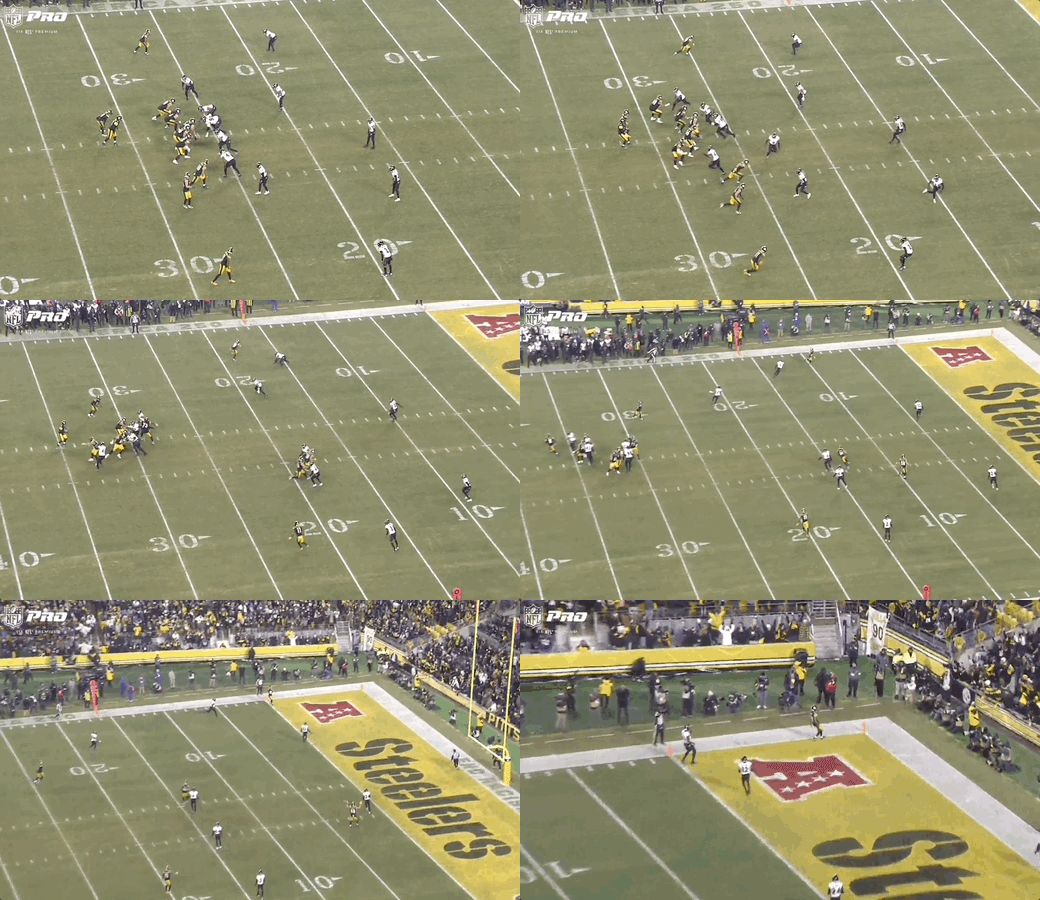
But this was another example of Rodgers just being in control, drawing up the backside of a play in the huddle. And that was the game-winning touchdown. And at the end of the day, this is why the Steelers won.
I went into this game thinking the Steelers had no shot because what they needed to do to win, they hadn’t been able to all season.
They could win those one-on-ones on the outside when D.K. Metcalf was in the lineup, but they couldn’t do it consistently without him. They couldn’t attack the middle of the field. Aaron Rodgers couldn’t get time in the pocket and hold on to the ball and look to work the middle of the field and look to push the ball downfield. And that’s one reason why they’ve been so bad on third and long this year.
But in this game, they were able to do all those things. They were able to do things in game 17 that they hadn’t done all season. And that, from an offensive perspective, really ended up being the difference in the game.
How the Ravens Passing Game Generated Big Plays
Now, I do want to talk about the other side of the ball just a little bit. The big plays that the Ravens created in the passing game, it was a combination of blown coverages by the Steelers and some great design by Todd Monken and the Ravens.
The first one to me was just a terrible play call, terrible play design from the defensive side of the ball. This was a fourth and short. I believe it was a 4th-and-3 from a 38-yard line. And the Steelers ended up actually going cover-0 there.
But they blitzed 6, and the Ravens had 6 guys in to protect. So you’re kind of putting your secondary in a tough position there. The point of the cover-0 blitz, especially in the middle of the field, is that you’re going to be able to bring one more than the offense can protect.