

There is exactly zero downside to the Vikings signing Kyler Murray.
First, there is no financial risk. Minnesota was able to bring him on for $1.3 million (the veteran minimum) since the Cardinals are on the hook for another $35+ million. If he doesn’t work out, it’s no big deal at all.
Second, if Kevin O’Connell can get the most out of Murray’s game like he did with Sam Darnold, the Vikings will have themselves one of the most dynamic play-making quarterbacks in the NFL this year and potentially for the future.
Murray will be just 29 to start the season. And through the first 87 games of his career, he’s amassed more than 20,000 passing yards and 3,000 rushing yards. Only Josh Allen and Cam Newton were a part of that club to this point in their careers.
Take advantage of our current offseason deal and subscribe for just $20 per year!
If he has a Darnold-like revival in 2026, it’s hard to imagine Minnesota letting him walk next offseason.
Third, J.J. McCarthy will be pushed to get his stuff together due to the competition. In the unlikely event that he’s the Week 1 starter because he out-dueled Murray in training camp, it will likely be the result of McCarthy having shown substantial improvement.
What Does Kyler Murray Add to the Vikings?
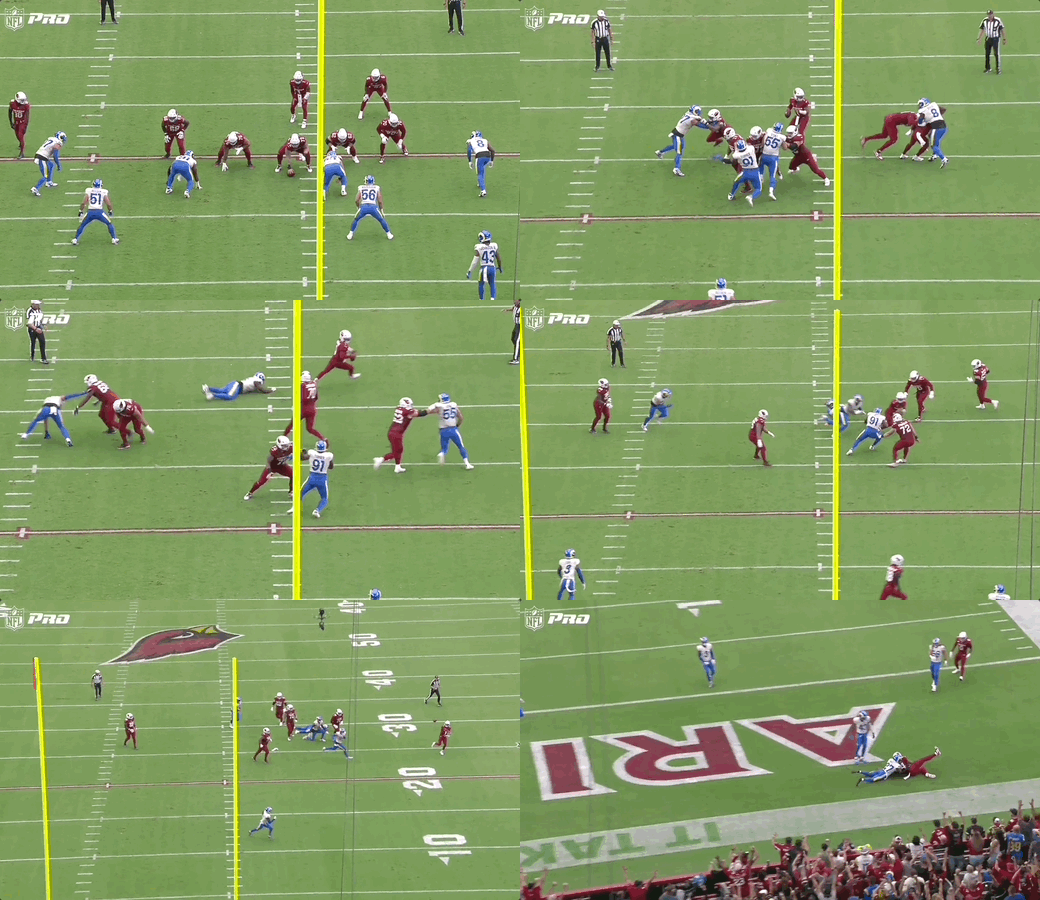
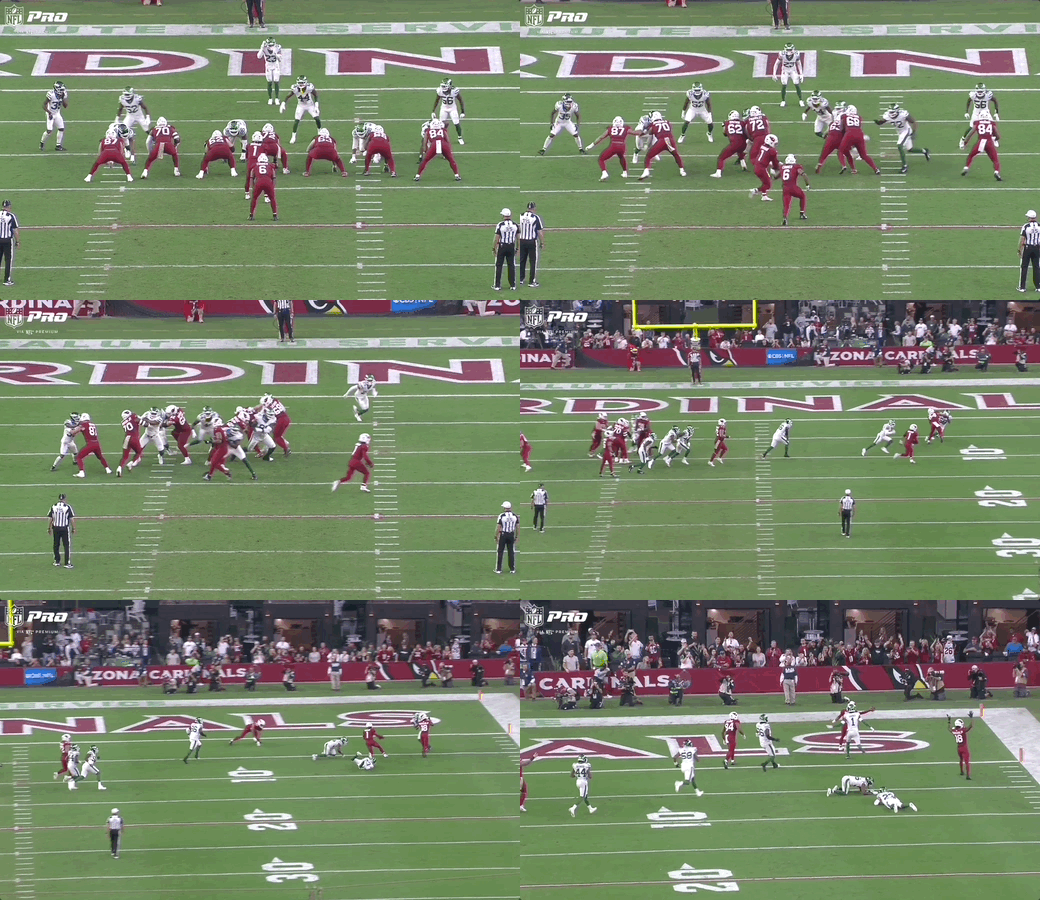
At his best, Kyler Murray is a big play waiting to happen. He’s a dual threat who can torment defenses with his arm or legs:
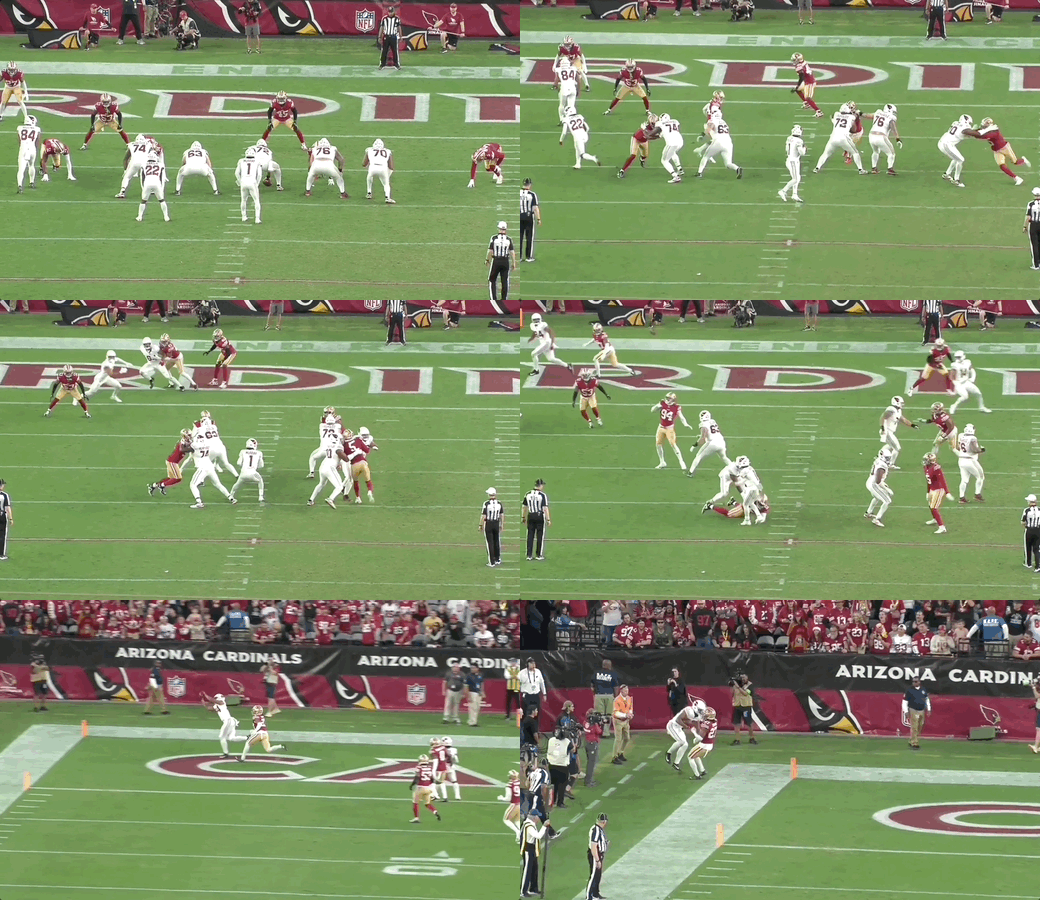
He’s great at throwing with touch, which will certainly play well in O’Connell’s offense:
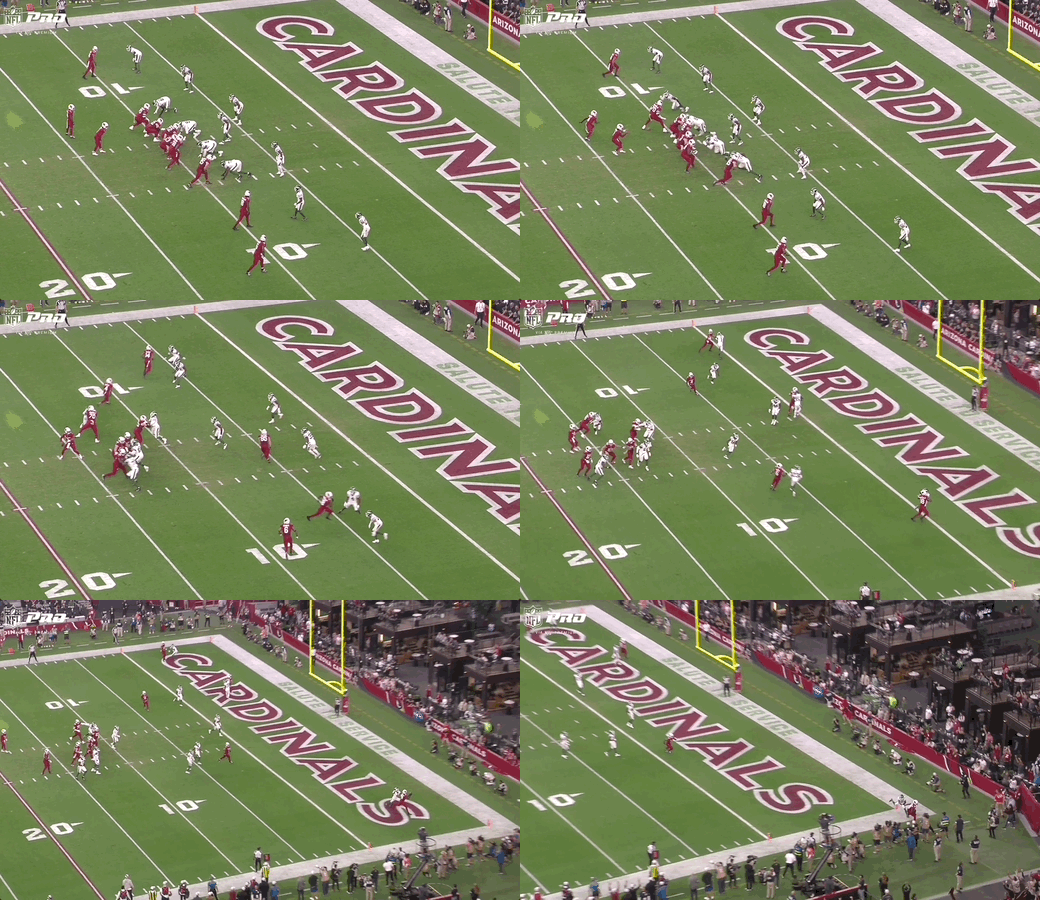
Murray has a natural throwing motion (that’s the baseball player in him), which helps make him an accurate passer. He’s completed 67.1% of his career passes, good for 9th best in the NFL among QBs who have played at least 2 full seasons since 2019:
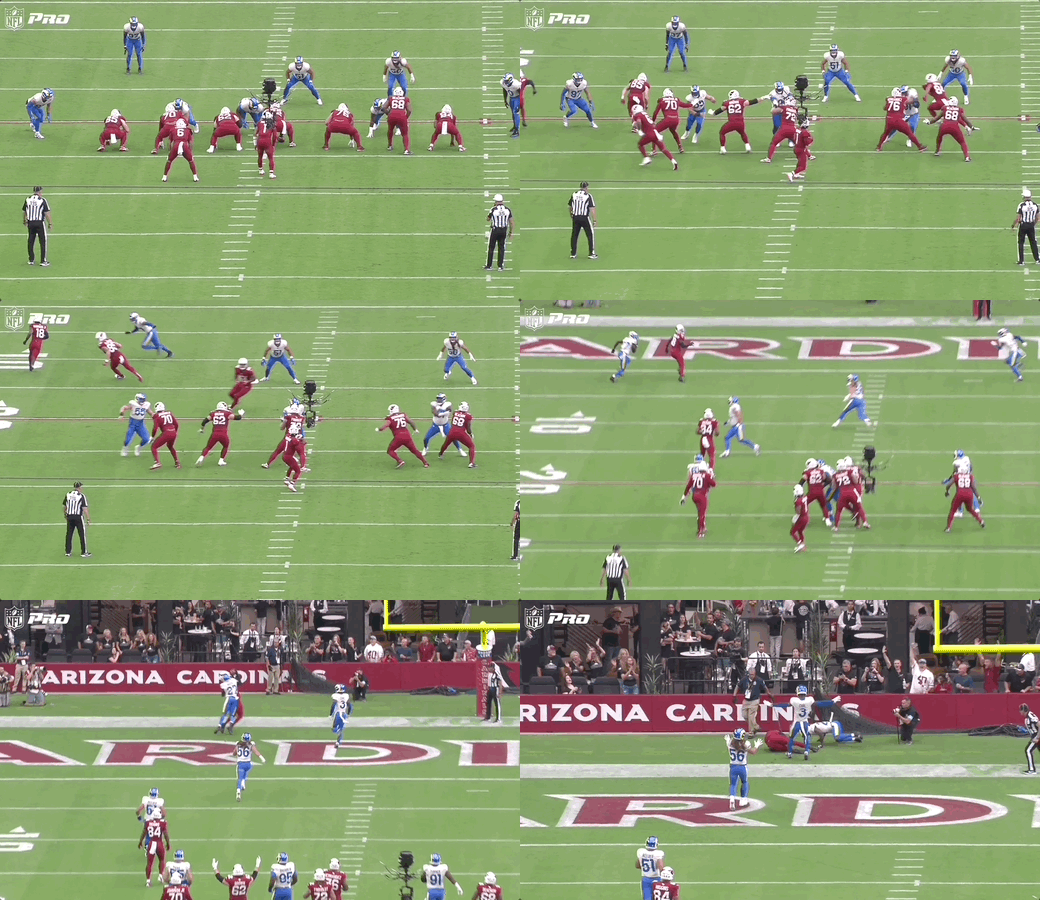
He’s also a dynamic runner who is the fastest player on the field most Sundays. Among the expected starting quarterbacks next season, he has the 4th-highest career rushing-yards-per-game average:
What are the Concerns with Murray?
You’re probably asking, “If he’s so freaking great, why’d the Cardinals opt to get rid of him and basically pay for him to play elsewhere?”
The main issue, as it is for many NFL quarterbacks, is consistency. He’s never been able to put it all together for a full season.
There have been stretches of his career where he’s looked close to breaking through. But those stretches always seem to be followed by prolonged downturns.
For instance, during the first 8 games of the 2020 season, Murray completed 68.1% of his passes, averaged 266.3 passing yards per game, rushed for an additional 543 yards, and racked up 24 total touchdowns (16 passing, 8 rushing). Arizona went 5-3 during that stretch.
During his final 8 games, he couldn’t maintain the same pace (66.3 completion %, 230.1 passing yards per game, 276 rushing yards, 13 total touchdowns). Arizona went 3-5 to finish the season.
A year later, the Cardinals started 7-0. During that run, Murray appeared to be mastering his passing skill-set, completing 73.5% of his passes for nearly 9 yards per attempt. He also had a 17-5 TD-INT ratio and a 116.8 passer rating. Murray added another 3 TDs on the ground during that stretch, but the majority of his success was coming from playing in the pocket.
After that hot start, though, Murray finished the season completing just 65.5% of his passes for less than 7 yards per attempt, a 7-5 TD-INT ratio, and an 86.5 passer rating. He missed 3 games, and the Cardinals went just 2-5 in the 7 games he did start.
We saw the same thing during the 2024 season. Through his first 10 games, Murray completed nearly 70% of his passes, had a 12-3 TD-INT ratio, and played to a 100.8 passer rating. The Cardinals went 6-4 during that stretch.
Over his final 7 games, however, he played to just an 85.9 passer rating and a 9-8 TD-INT ratio. The Cardinals lost 5 of those 7 games and missed the playoffs as a result.
Injuries have certainly played a role in Murray’s up-and-down career. He missed those 3 games mentioned above in 2021. A season-ending knee injury in December of 2022 forced him to miss the final 4 games that year as well as the first 9 of the following season. Last year, he only played in 5 games.
Along the way, he’s played through some injuries that have likely caused dips in his performance.
However, his inability to execute consistently from the pocket is probably the biggest reason for his uneven performance throughout his career.
Murray’s height certainly contributes to that. Not only do his passes get knocked down at the line, but he also can’t always see the field from the pocket. That’s somewhat responsible for the run-around nature to his game.
The fact that the Cardinals tried to put language in his contract forcing him to study more film a few years ago was a huge red flag about his desire to understand an opponent’s defense and use that knowledge to attack holes in their coverage. That might be another good explanation for why he hasn’t been able to put it all together from the pocket throughout his career.
All of it adds up to Murray being largely a splash player, capable of making a few big plays per game but unable to execute the offensive scheme as designed for a full 17 games.
One of the most interesting storylines of the 2026 NFL season will be the O’Connell-Murray marriage. Can Kevin O’Connell get Murray to play at a high level with more regularity from the pocket? Can he revive his career like he did with Super Bowl LX champion Sam Darnold?
There is absolutely no risk to the Vikings in trying to find out.