

Below, I’ve posted the transcript of the most recent Football Film Room podcast and included clips of the plays I talked about in the episode.
Feel free to read the transcript on it’s own or use it (and the plays I included) to follow along with the podcast to get more context for what I’m talking about.
In this episode, I discuss the following:
Why Every Quarterback Needs Help
Joe Montana’s Early Years
Tom Brady’s Development
Breaking Down Fernando Mendoza
Breaking Down Ty Simpson
Mendoza vs. Simpson
Who Should be Interested?
Here is a direct link to the podcast, and below that you can find the transcript and plays:
The Football Film Room Show - Breaking Down Fernando Mendoza and Ty Simpson

In episode #25 of The Football Film Room Show, I do a deep dive on Fernando Mendoza and Ty Simpson. Should the Raiders consider Simpson or is selecting Mendoza a foregone conclusion?
The Football Film Room Show - Episode #25 Transcript
Welcome to the Football Film Room Show. I’m Nick Kehoe, and we’ve got another great episode for you today.
We’re going to talk about the top quarterback prospects in the draft. A couple weeks ago, nobody was talking about anyone other than Fernando Mendoza. Seemed like a foregone conclusion that he’d be going number one overall to the Raiders.
And based on reports that he is already learning the Raiders playbook, it seems like that’s still a foregone conclusion. But in recent weeks, Alabama quarterback Ty Simpson has entered the discussion.
And that’s thanks in large part to Dan Orlovsky throwing a giant turd in the punch bowl and mixing things up, I guess you could say. Saying that he thinks Ty Simpson is actually the better prospect.
So I’ll get into all that. I’ll break down both players’ games, tell you their strengths and weaknesses, compare the two, and tell you why I don’t entirely disagree with Orlovsky’s analysis.
But before I do that, I want to reiterate a point I made on the podcast a few weeks ago about the quarterback position in general…
Every Quarterback Needs Friends
When you look at the all-time great quarterbacks, there are very few in the history of the NFL who you can say they’d still be considered all-time greats no matter what situation they were in, no matter what team they were drafted by or traded to or signed with.
I think you could even make the argument that there are no quarterbacks in the history of the game that would have still had their level of success had they been in any other situation.
And that’s because football is the quintessential team sport. It depends who you have blocking for you. It depends who you’re throwing to, what running game you have to support you.
And on top of that, it depends who your head coach is, what his philosophy is. It depends who your offensive coordinator is, who’s calling the plays. Depends who your quarterback coach is. Depends how you’re developed.
And if you want a little proof of that, just think about who the two best quarterbacks are in the history of the game, at least according to the general NFL-world consensus. Tom Brady and Joe Montana. Now, I’m not going to get into a discussion with you today about if they are actually the best. We’ll save that for another time. But I think that’s just the general consensus.
But the interesting thing is that both of those quarterbacks would not be considered the GOATs if not for the exact situations they were in.
Now, again, I want to emphasize, I’m not trying to take away from either quarterback. I’m not trying to say that each individual player doesn’t have a significant amount of say in how well they play, how well they perform based on their preparation, physical training, their mental makeup, etc.
But I think it’s hard to deny that Joe Montana would be the Joe Montana we all know and love if he hadn’t been drafted by Bill Walsh. And I think the same can be true of Tom Brady with the Patriots.
Joe Montana’s Early Years
Let’s go back to 1979. That was the year that Montana was drafted. He was not highly regarded around the NFL at that time. He ended up getting drafted 82nd overall, end of the third round.
But there were questions about his size. He was 6’2”, but just 185 pounds. Receiver Dwight Clark, when he first met him, he thought he was the kicker or the punter. So there were questions about could he withstand the beating that quarterbacks in the NFL took at that time.
He didn’t have a powerful arm. And in that era, the NFL passing game was kind of a complement to the run. You were attacking downfield. No one was dinking and dunking and getting four yards at a time.
And then, of course, Bill Walsh came along. 1979 was his first year as the 49ers head coach. We all know now that he implemented that West Coast offense where the passing game was based on timing and rhythm and you mixed in short throws with your intermediate and downfield passes.
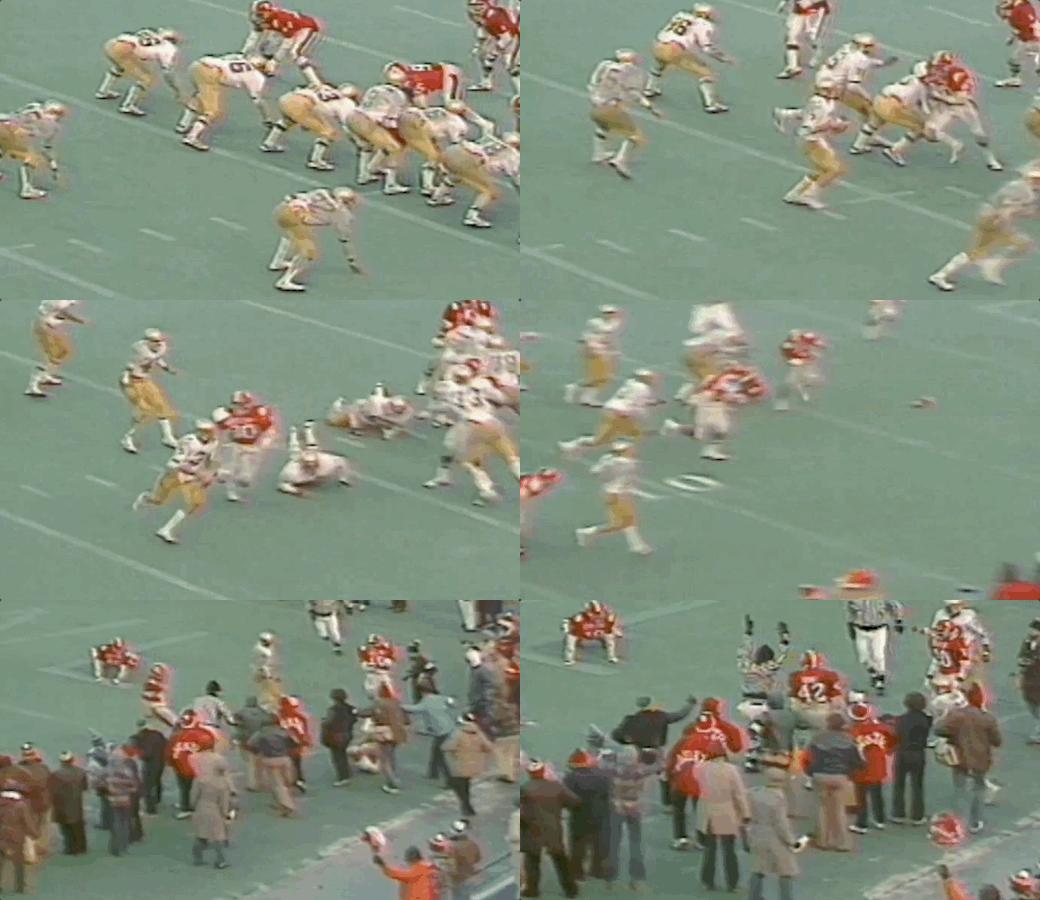
And because he was the only one running his offense that way, he saw something in Montana. He liked how quick and agile his feet were. I believe he said Montana looked a bit like a ballet dancer. That’s how smooth and rhythmic he could be with his feet:
And that fit perfectly for his passing game:
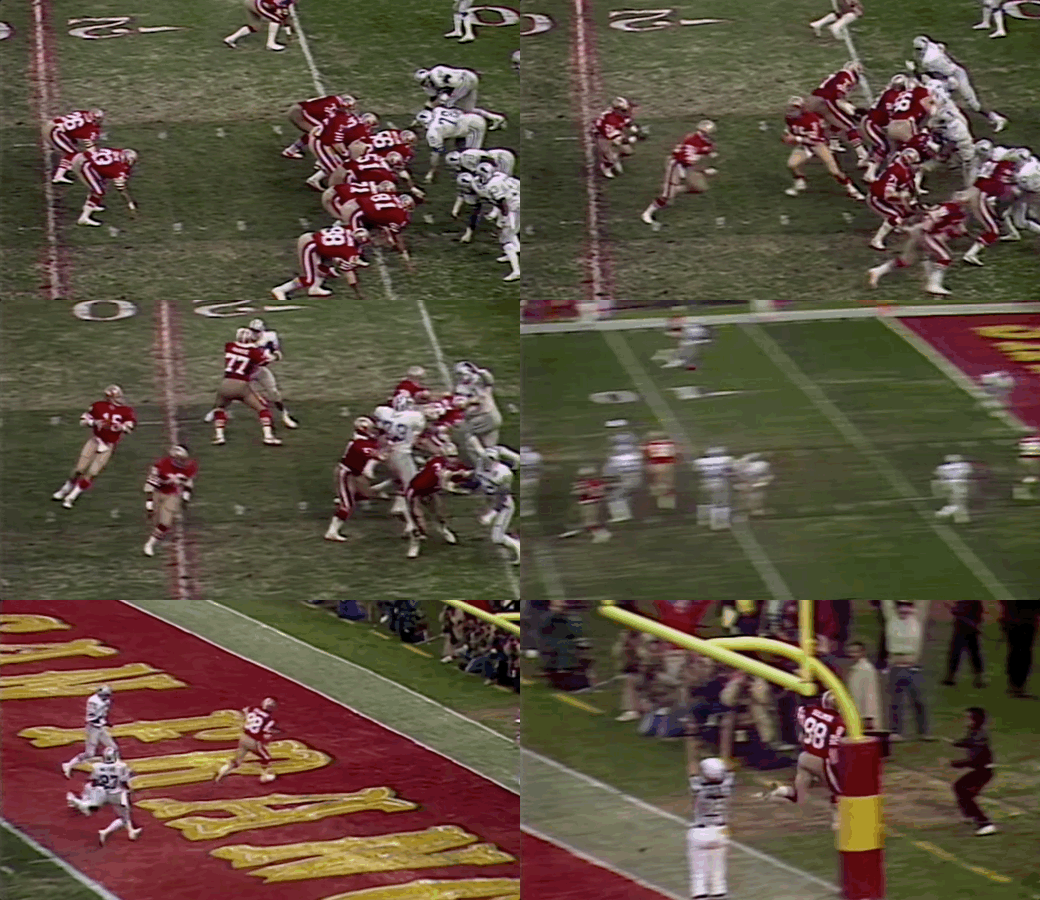
So he was able to push aside the fact that Montana didn’t have an especially strong arm or was inconsistent in college or was slight in his build.
And I think it’s fair to say that if Montana had been drafted anywhere else, he may not have been playing in a system that was perfectly suited for those abilities.
On top of that, Walsh didn’t just throw Montana into the fire. Montana barely played his first season. He only had one start.
But here’s the thing. Walsh found ways to insert him into the game at times. But he wouldn’t do it randomly. He was very deliberate with the way he developed Montana. He would wait until the offense crossed midfield so that he could put Montana in position to succeed. And again, he did it sparingly. Montana threw just 23 passes that season. 49ers went 2-14.
The next year they came back, and Walsh started to work Montana into the offense a little bit more. Same sort of thing. He would put Montana in when it was advantageous to do so, when he could be put in a position to succeed, either in the opponent’s territory or in the red zone.
And eventually, by season’s end, Montana became the starter:
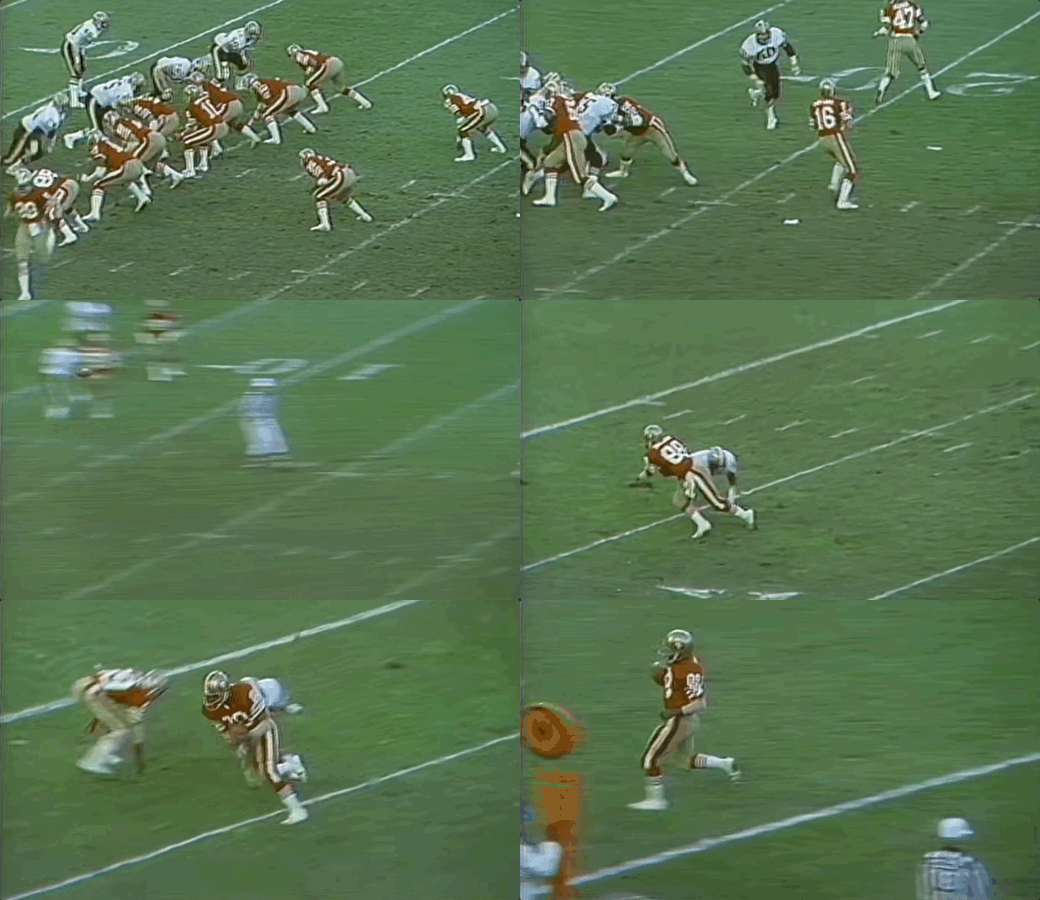
I think he started seven games that year in total. But there were 11 overall games where he threw a pass. So again, Walsh was very intentional with the way he developed Montana.
And then 1981 comes along. That’s the first year he’s the full-time starter. 49ers go 13-3, go on to win the Super Bowl, and the rest is history.
But I think it’s safe to say that wouldn’t have happened anywhere else.