

Have you ever listened to a football podcast and wished you could see the plays the hosts were referring to? Maybe you’ve experienced that with my podcast, The Football Film Room Show.
With that in mind, I posted the transcript of the most recent episode below and included clips of the plays I was talking about.
Feel free to read the transcript on it’s own or use it (and the plays I included) to follow along with the podcast and understand just what the hell I’m talking about.
In this episode, I discuss:
The 2007 Giants
Trevor Lawrence’s career
The Texans’ Week 17 win over the Chargers
The Chargers offense
Kyle Shanahan’s scheme
The Steelers’ loss to the Browns
The Ravens run game
Here is a direct link to the podcast, and below that you can find the transcript and plays:
The Football Film Room Show - Episode #14

In episode #14 of The Football Film Room Show, I revisit the 2007 Giants and Eli Manning’s complete 180 on the way to a shocking Super Bowl win over the 18-0 Patriots. Is another #1 overall pick (Trevor Lawrence) on the verge of a Super Bowl run after a similar start to his career?
The Football Film Room Show - Episode #14 Transcript
Welcome to the Football Film Room Show. I’m Nick Kehoe. Got another great episode for you today. We’re going to talk about the Week 17 action:
Trevor Lawrence and the Jaguars, he’s been playing exceptionally good football in the last five weeks.
We’ll talk about the Texans winning their eighth straight, and they’ve got the formula, I think, to make a deep playoff run.
We’ll talk about the 49ers and Kyle Shanahan, what he’s been doing with that offense.
Brock Purdy’s performance.
We’ll talk about those Pittsburgh Steelers and a giant missed opportunity in Cleveland.
Talk about the Ravens’ run game.
We’ll preview that game [Ravens-Steelers] a bit.
But before we do any of that, I want to go back in time to 2007 and the New York Giants. And specifically, I want to talk about Eli Manning.
Eli Manning Coming of Age
That year, his career was really at a turning point. He was four years in. Everyone kind of expected him to be just like Peyton Manning right away. And through those first four seasons, he really wasn’t.
Looked like a completely overmatched quarterback during his rookie season. Had some really good moments in year two, but then finished off the year with a flop in the playoffs. They were shut out at home by the Panthers. 2006, they went 8-8. Snuck into the playoffs. And he played okay, but wasn’t overwhelming by any means.
And then 2007 came along. And that was another frustrating, streaky season for Eli Manning. He ended up leading the NFL in interceptions with 20. The Giants started off 0-2. Manning hurt his right arm in the first game of the year. Played through it. Ended up winning six in a row.
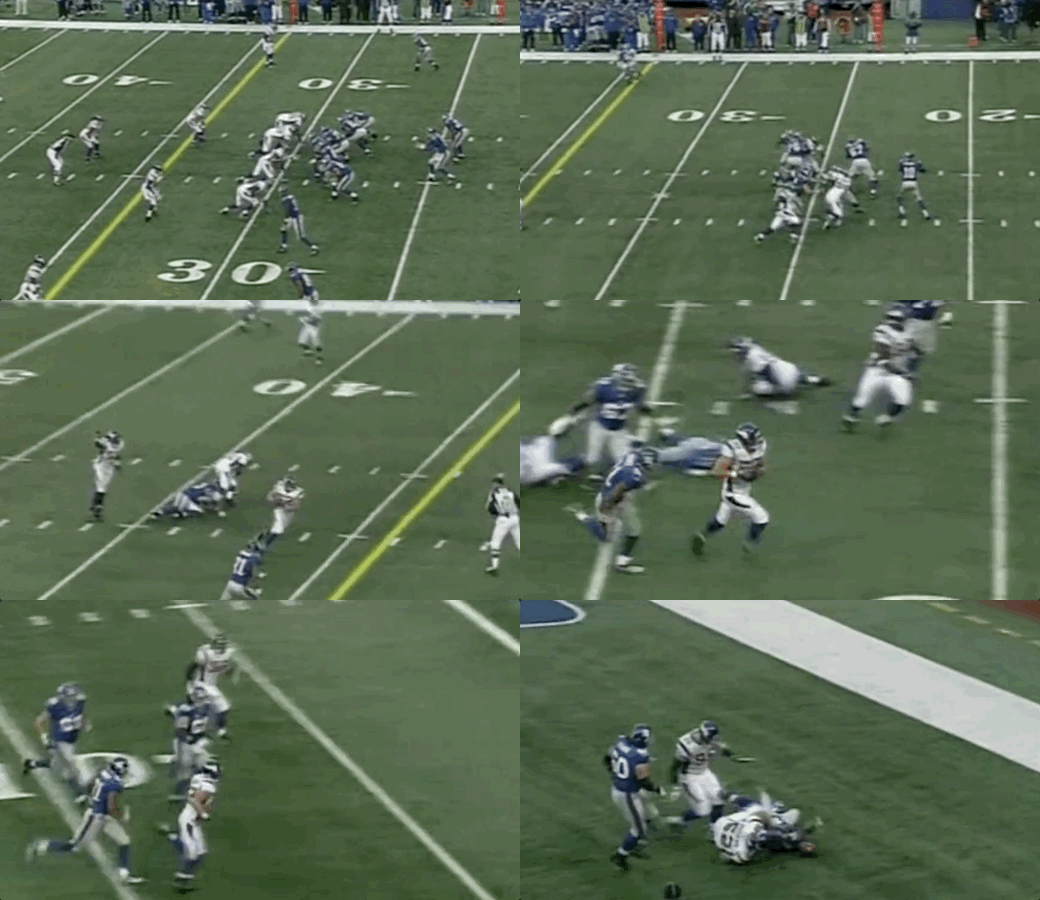
And then really it was one step forward, two steps back the rest of the way. And the second half of that season included just some atrocious performances by Manning. He had one game against the Vikings at home where he threw four interceptions, three of which went for touchdowns.
He had another game late in the season at home against the Redskins where I think he set a record for incompletions in a game. In the Giants’ second-to-last game, they played the Bills, and they would actually clinch the playoffs in this game, but it wasn’t because of Eli. He threw 15 passes in that game, two of which were intercepted.
I mean, there were times during that season in his fourth year in the league that it just seemed like the game was moving too fast for him.
Now, as most of you probably remember, from that point forward, the Giants would go on a run. Their final game of the year, they’d play the Patriots. The 15-0 Patriots. The Giants had everything clinched. There was nothing they could do to advance their seeding or to drop in the playoff seeding. They knew exactly where they would be, who their opponent would be.
A lot of people were saying they should just rest their starters and let the Patriots make history in their building. The Giants decided, hey, no, we’re not going to do that. And so they played with the Patriots. They went toe-to-toe with them. Ended up losing the game 38-35, and Eli Manning actually surprisingly had a great game. He threw for 250 yards, four touchdowns.
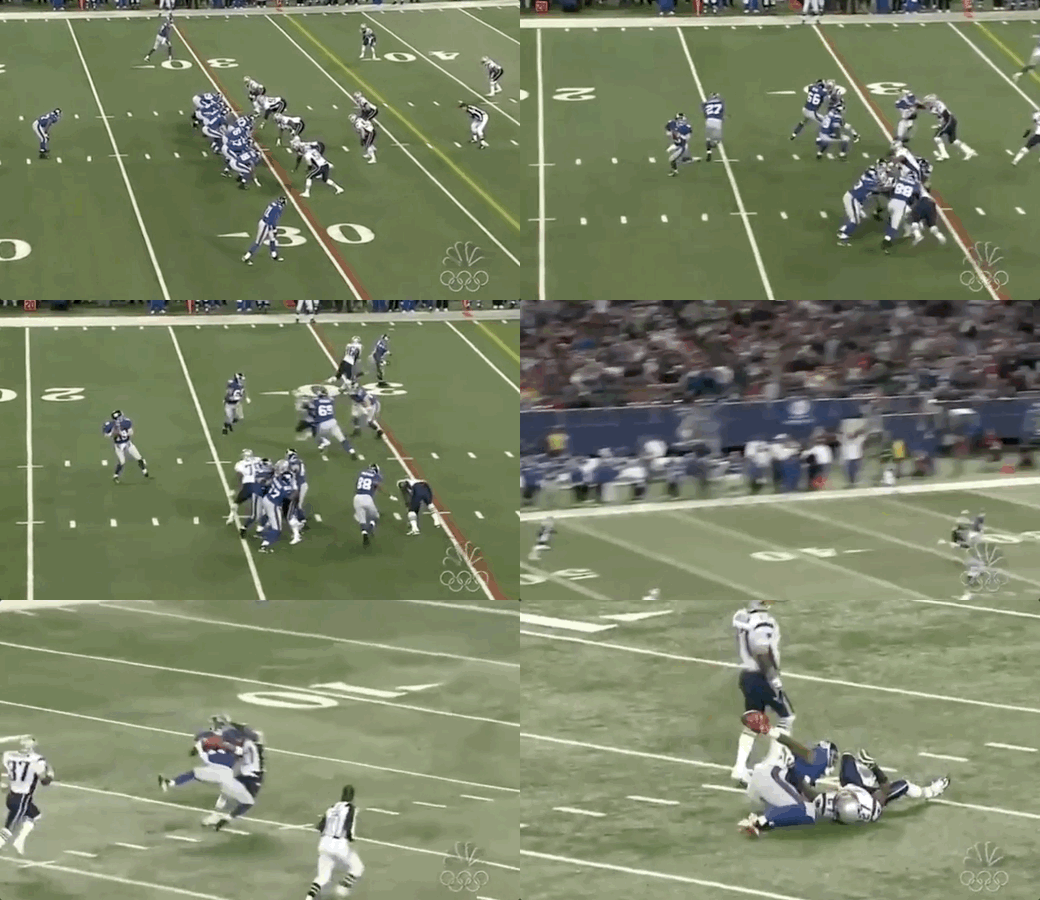
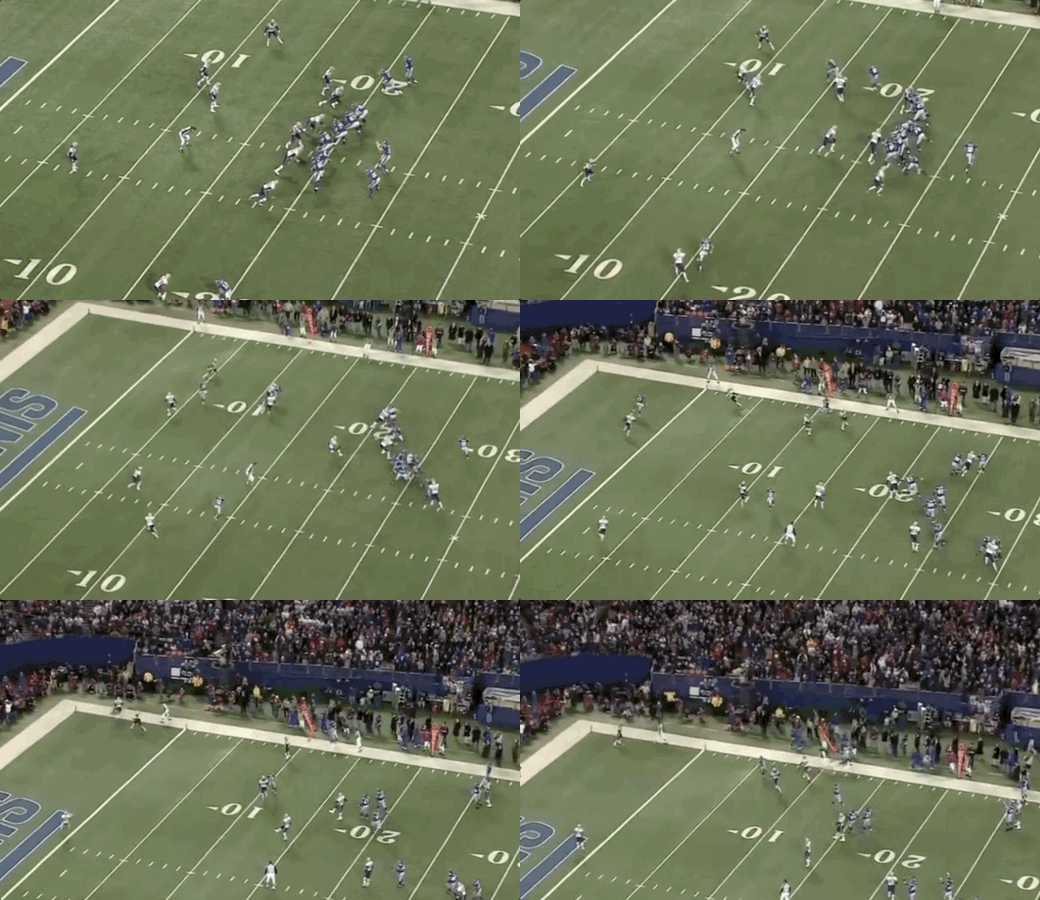
The Giants had the Patriots on their heels. They were up, I think, 28-16 at one point in the second half. But that sort of spearheaded a nice little run for Eli Manning in the playoffs because he looked like a different quarterback from that point forward.
Now, what were the Giants doing differently? They were simplifying things. The reads, where he was supposed to go with the ball, everything was defined, or most pass plays were defined.
In fact, I’ll inject myself and my career a little bit into this. 2007 was my first year out of college. Had played quarterback at Amherst, and my first job after graduating was at NFL Films working on the NFL Matchup Show with Greg Cosell, Ron Jaworski, Merril Hodge. Dream job. It was as awesome as it sounds. Basically just sat around all day watching film (I’m oversimplifying things). And by watching film, I say sometimes I was watching film and sometimes I was just sitting in the back of the room listening to Jaws and Greg as they watched film and keeping my mouth shut.
But I remember specifically during that Giants run, we were amazed that the Giants weren’t running a bunch of complex schemes. It was flat-curl, flat-curl, flat-curl, flat-curl-pin, flat-curl-pin.
And for those of you who don’t know what that play is, flat-curl is basically one receiver runs a curl route where he’s breaking inside at about six to eight yards, depending on the down and distance. And another receiver is running a flat. And then you as a quarterback, you’re basically just reading the defender in the area. Does he go with the flat or does he go with the curl? If he goes one way, you throw it the other way. And sometimes they would introduce a pin route or a vertical route that would keep any other defenders from getting near.
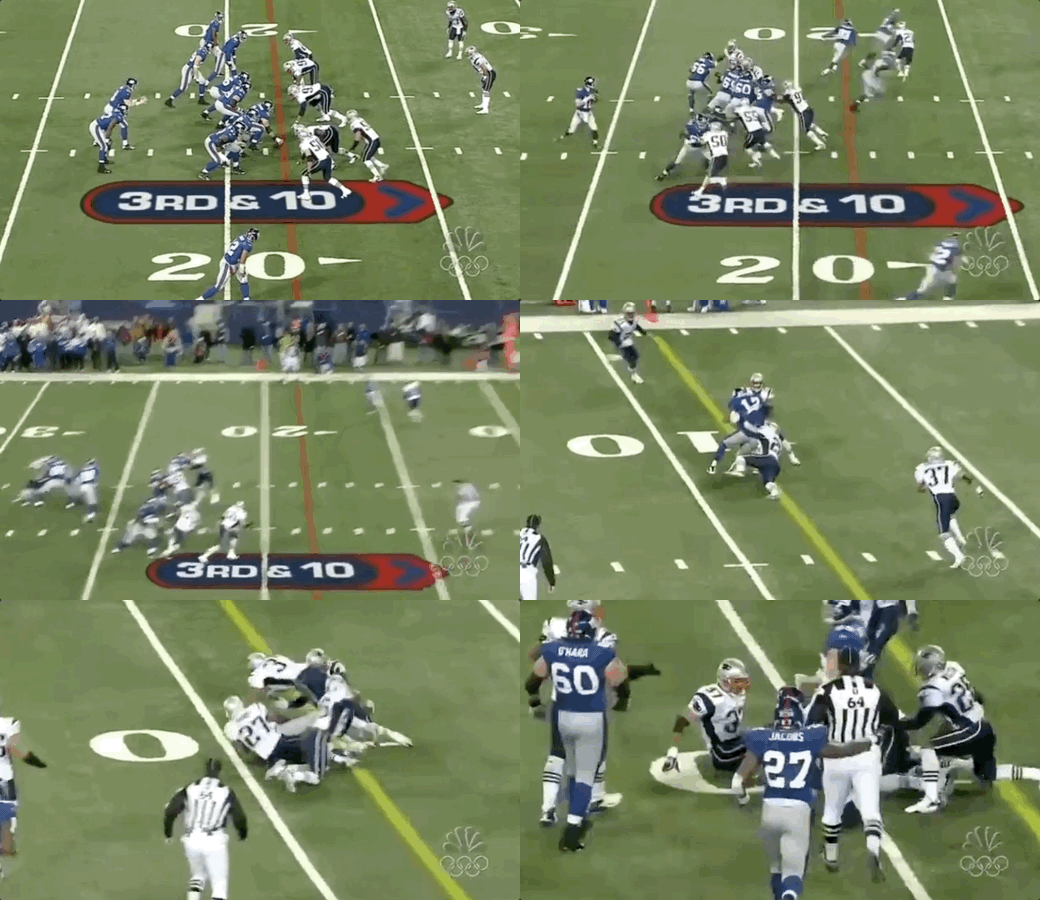
And we were amazed. We just kept saying, at some point, the defense is going to catch on to this and they’re going to be able to stop this. But no one really did.
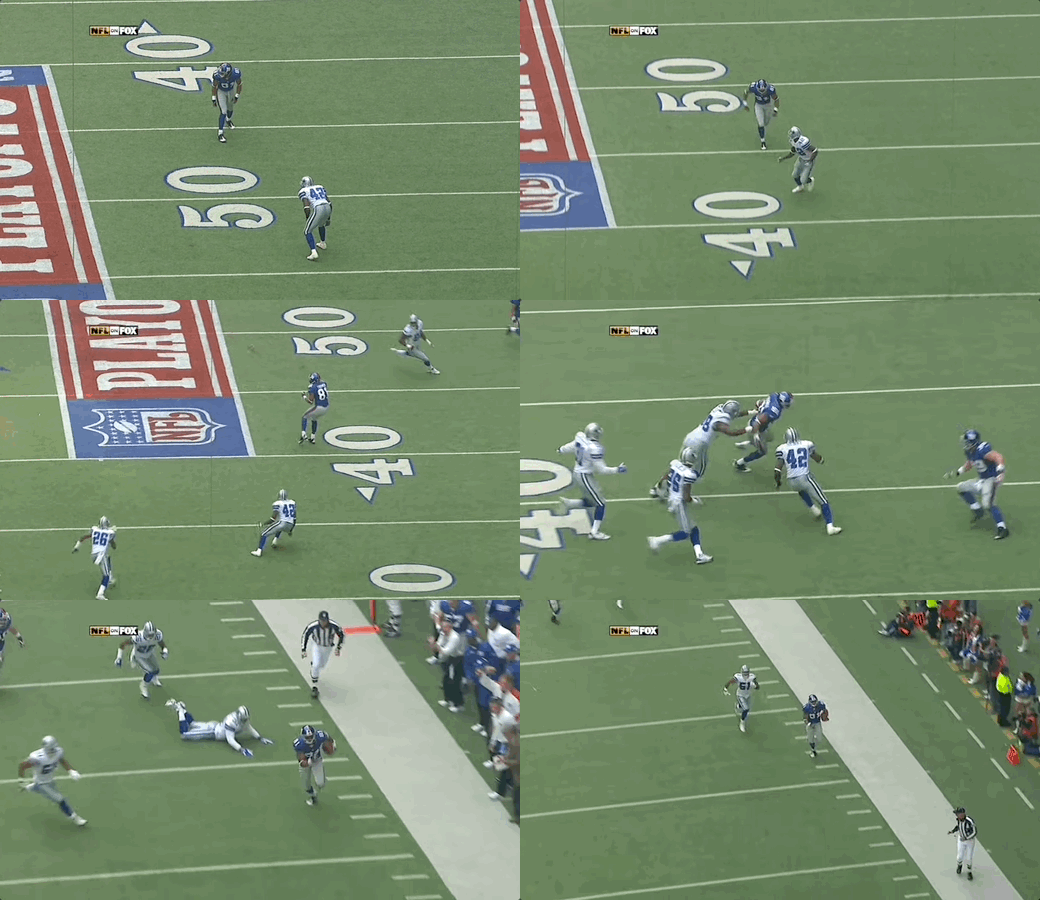
And the Giants went on to beat Tampa in Tampa. They went on to beat the Cowboys in Dallas.
Eli Manning threw for 185 yards in the first game, 163 in the next. Attempted just 27 passes against the Buccaneers, just 18 passes against the Cowboys. But he was efficient, played a clean game, kept the offense moving, didn’t make any mistakes.
And then they got to the NFC Championship game, and things continued to be simplified. You know what play they ran all the time in that game? Hey, where’s Plaxico Burress? All right, I’m just going to throw it to him. The Packers left Plaxico Burress in one-on-ones against Al Harris all night, and Eli hit him 11 times for 151 yards.
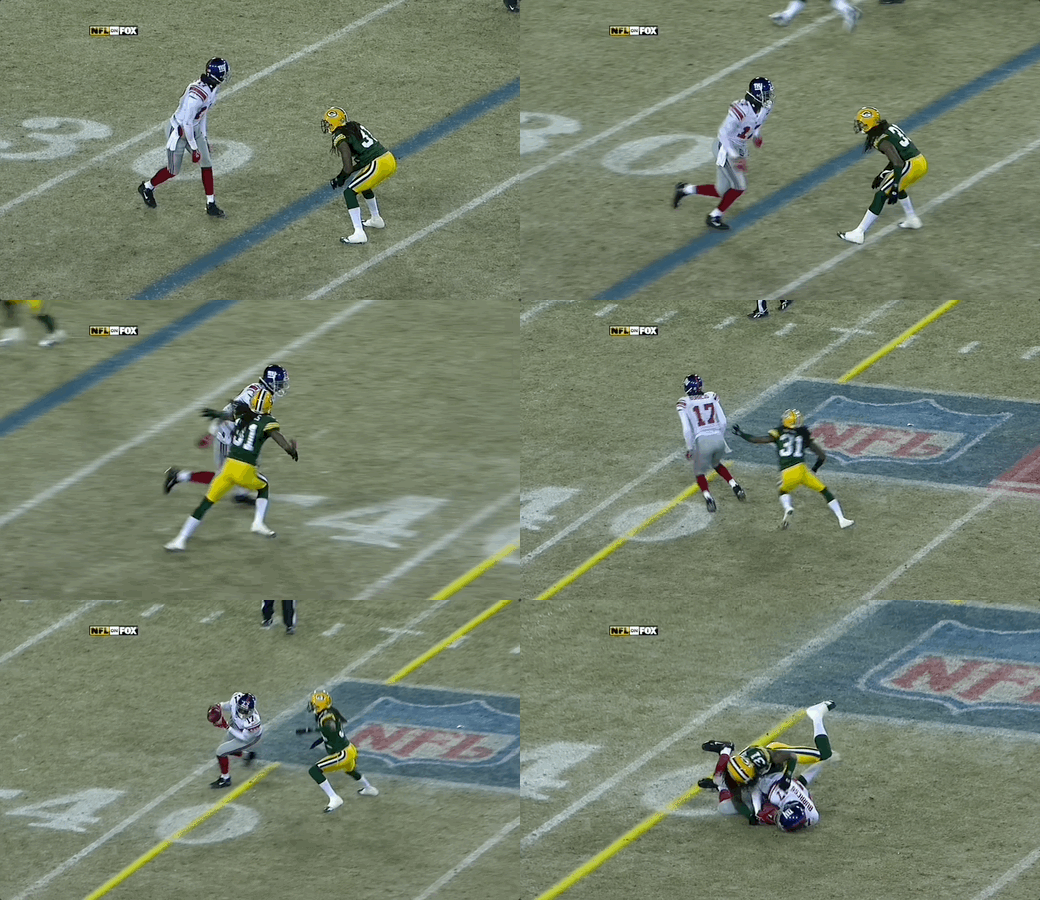
The Giants, as you all know, would go on to win the Super Bowl.
Again, it wasn’t an offensive explosion that did it, but Eli kept the offense going, kept them on schedule, led two key touchdown drives at the end.
But the bottom line was that not only did Eli play well during these playoffs, he looked like he belonged. And he gained more and more confidence with each game.
And a big reason for that was the simplified play designs, the simplified play calls. Eli knew what he was looking at, knew where to go with the ball, and he could be decisive, get the ball out of his hands on time, and keep the offense moving forward.
Now, it’s amazing to think about that because Eli Manning is a quarterback who we all know what his strength is. He’s not a run-around quarterback. He’s not just making plays with his arm. He had a strong arm, but he relied on anticipation, accuracy, getting the ball where it was supposed to go, understanding what the defense was doing and attacking it accordingly. But even he needed a little bit of help at that point in his career.
Now, you’re probably asking yourself, why are we talking about this? We’re in week 18 of the NFL season. Don’t we have more important things to discuss?
Well, the reason I bring it up is because Eli Manning, a former number one overall pick, in his fourth year, finally started to put it all together. And it’s very reminiscent of what you’re seeing right now from another number one overall pick, Trevor Lawrence.
Trevor Lawrence and Liam Coen
Now, Lawrence is in his fifth year, so it’s a little bit different than Eli. But I guess you could take away that first year with Urban Meyer, call that a wash. This is really his fourth season.
But regardless, he has had a very streaky start to his career where there have been high expectations. He had that first year with Urban Meyer. That was just a disaster of a season. But it wasn’t just Meyer. Lawrence was making decisions that you didn’t see him make in college.
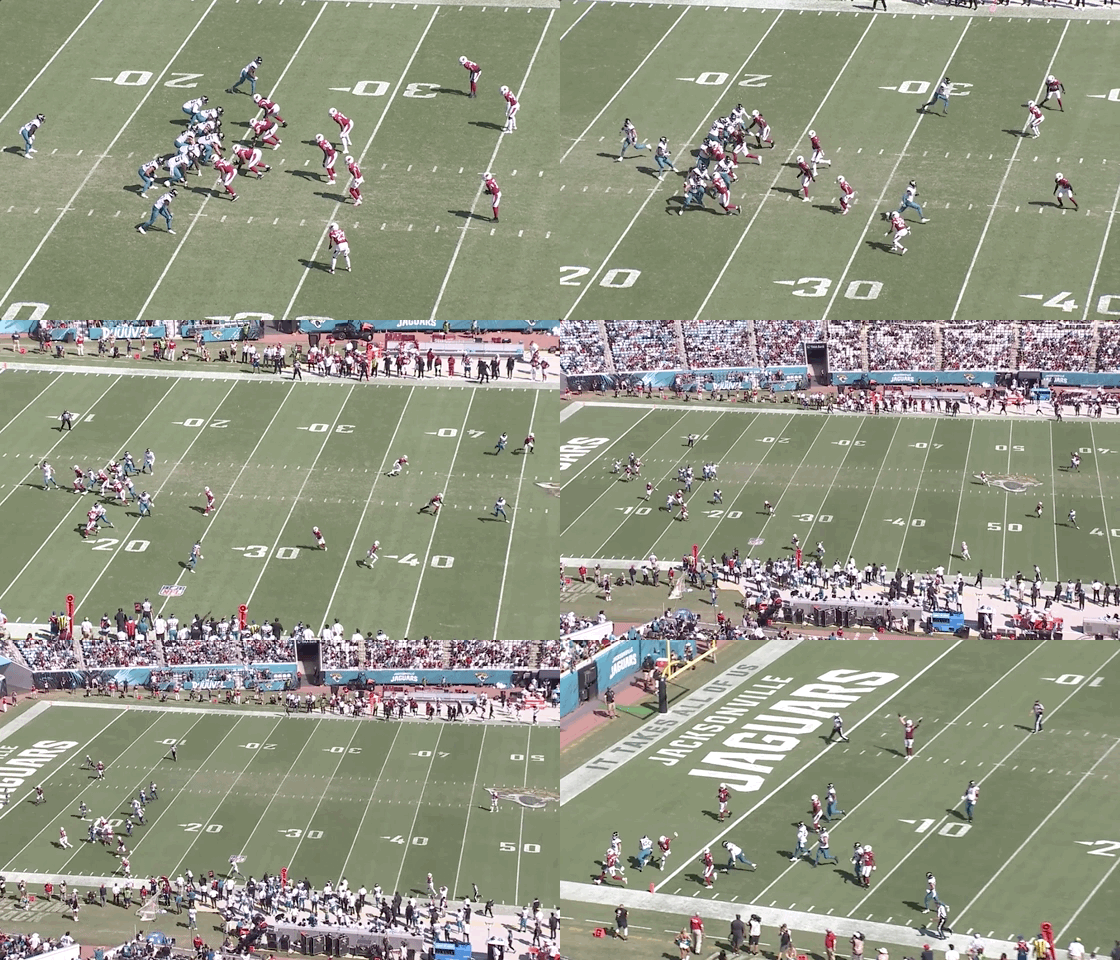
He was not seeing the field.
Then Doug Peterson came along and actually righted the ship a little bit. Lawrence made the playoffs in the second season, had that great comeback win against the Chargers.
But then the next year came along, and after starting 8-3, he injured his ankle pretty severely, missed one game, but really was dealing with the ankle the rest of the year. Was playing through a pretty serious injury, and he fell back to earth.
Then his fourth season last year, everything was a disaster. They got off to a terrible start. He was missing throws.
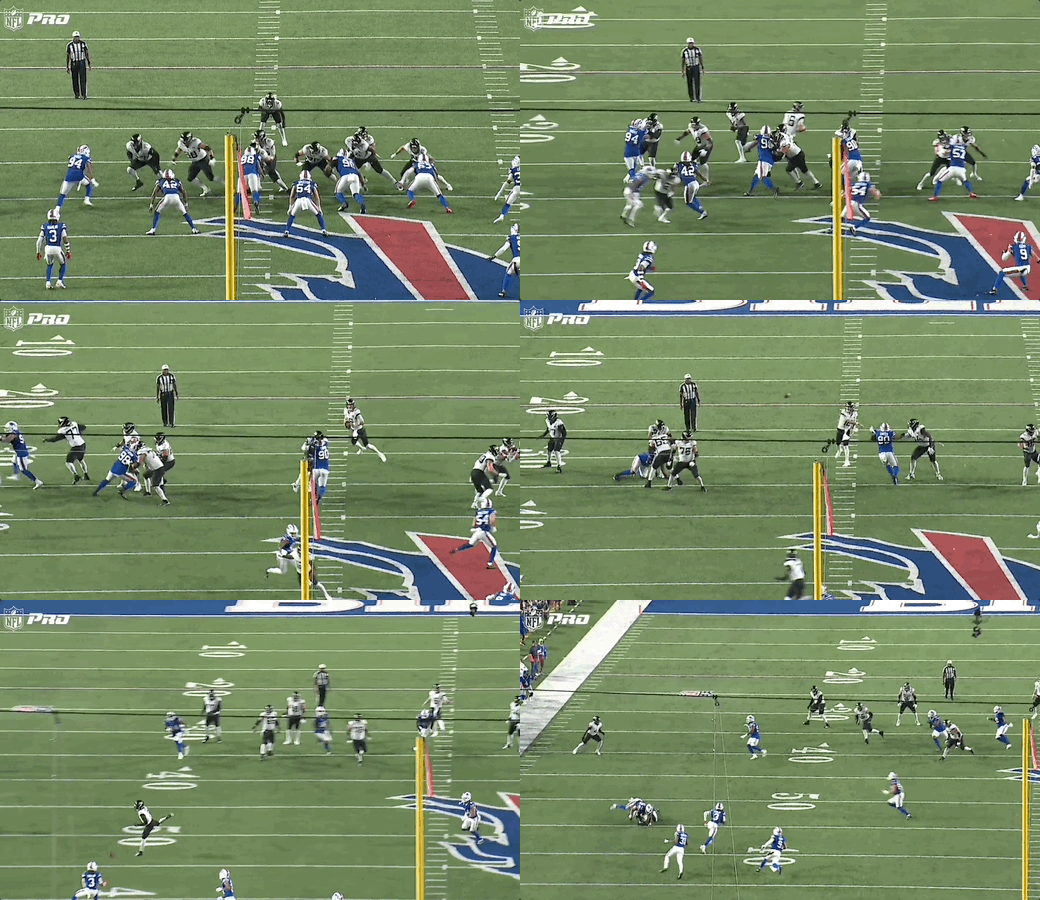
There were talks about Peterson getting fired all season. Eventually, Lawrence got knocked out with a concussion midway through the year and didn’t play the rest of the season. And similar to Eli, you’re just thinking, where is this career going, man? What is the peak for what he can be? Is he just a middle-of-the-league quarterback?
Now, things are a little bit different with Lawrence than with Eli because he’s got more physical tools. He’s 6’6”, can throw the hell out of the ball, and he can run. He can make plays with his legs. But it’s been tough to put my finger on why Trevor Lawrence hasn’t been a more consistent quarterback throughout his career.
Because one week you’ll see him play and he’ll throw for 300 yards and he’ll look every bit the part as that generational can’t-miss talent everyone was talking about when he came out in the draft five years ago.
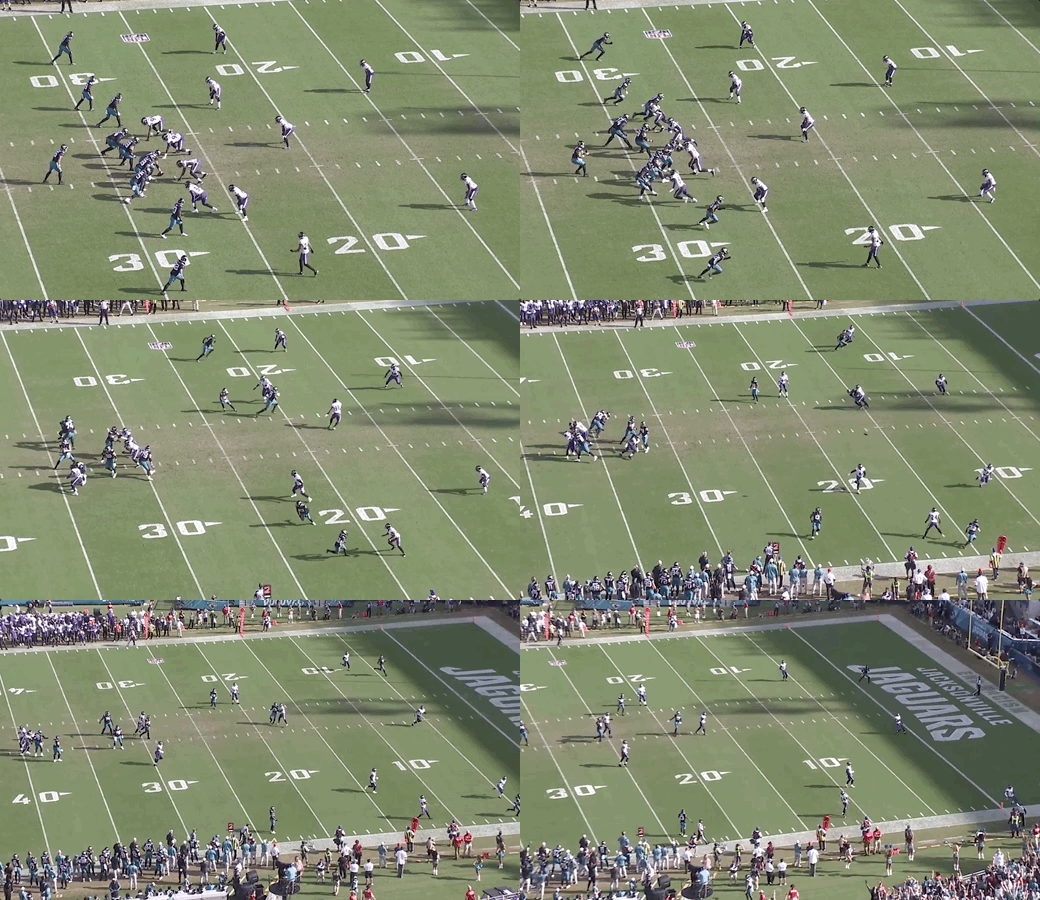
And then he’ll have another game that he follows it up with where he’s making bonehead decisions or just decisions where you just don’t know why he made them. It doesn’t make sense. Or he’ll look to run or he’ll get flustered with pressure. He’s always struggled against the blitz and with pressure around him so far since being in the NFL anyway.
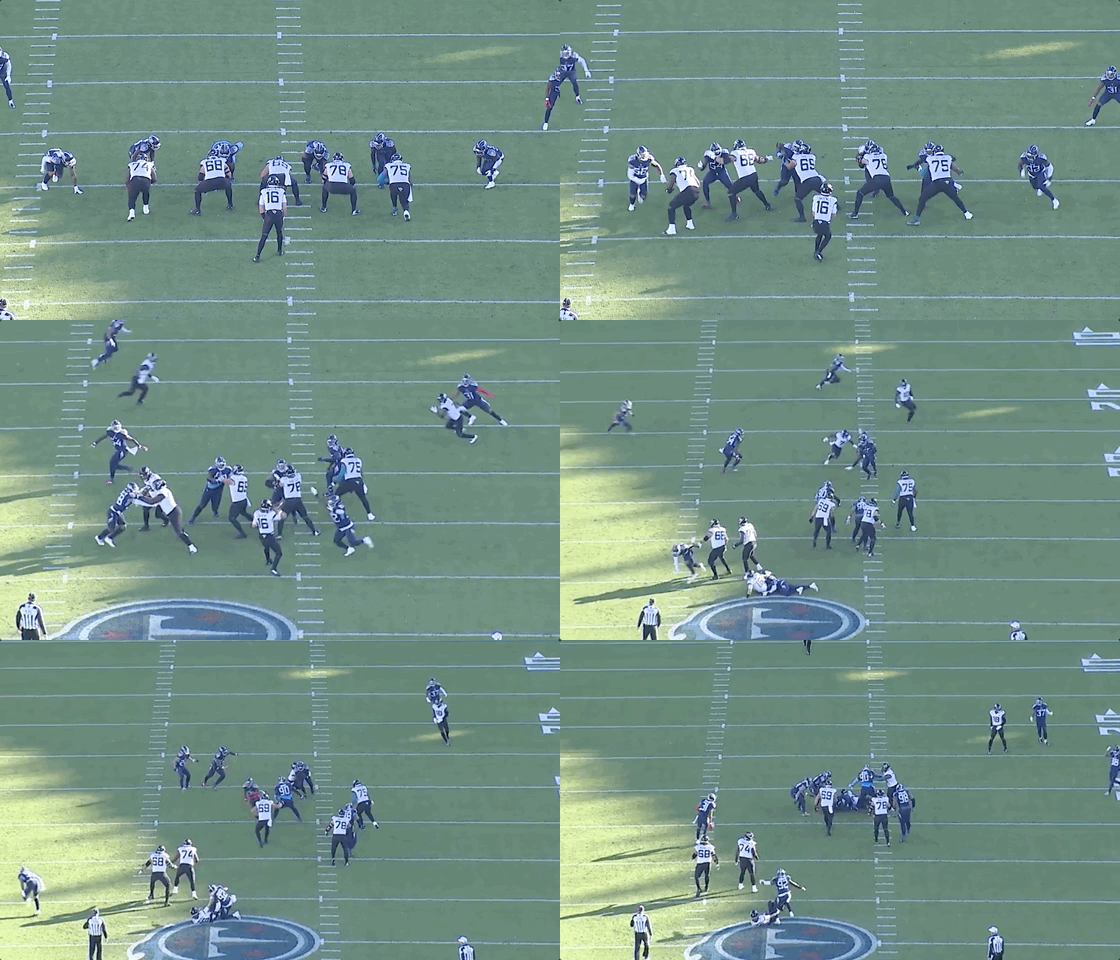
And I’ve got a little bit of a theory on this. Now bear with me for one second, but if you break down a pass play into three different phases, we’ll just start at the snap. We won’t get into the whole pre-snap game. To just simplify things, let’s say there are three phases to every pass play.
There’s the first phase, which is where the quarterback drops back, hits his back foot, and should be getting the ball out to his first read. And whether that’s a two-receiver combo or the first receiver in a progression, obviously there are different types of reads. Won’t get into all that right now. But that first phase is just here’s where the ball is designed to go. You hit your back foot, the receiver’s open, you throw it.
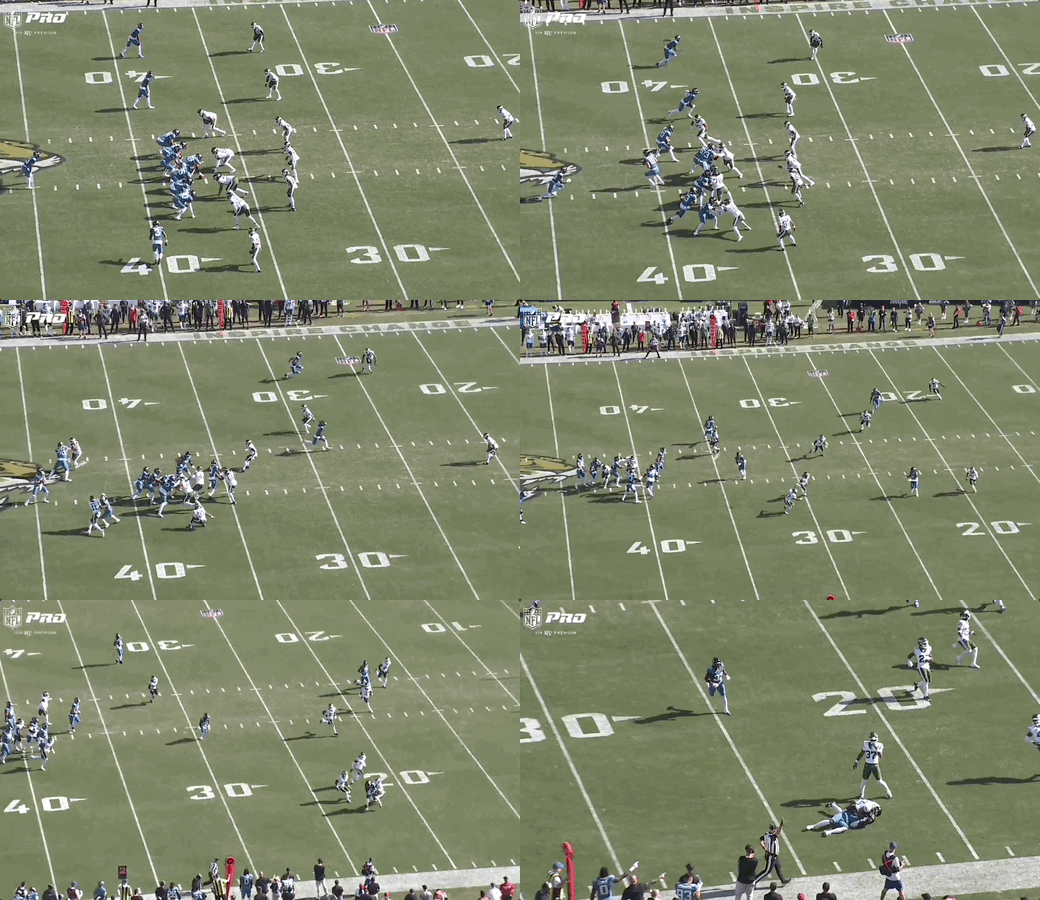
Phase two is the rest of the read, and that can be three receivers, four receivers, five receivers, but phase two is just the rest of the read, and you’re doing that from the pocket.
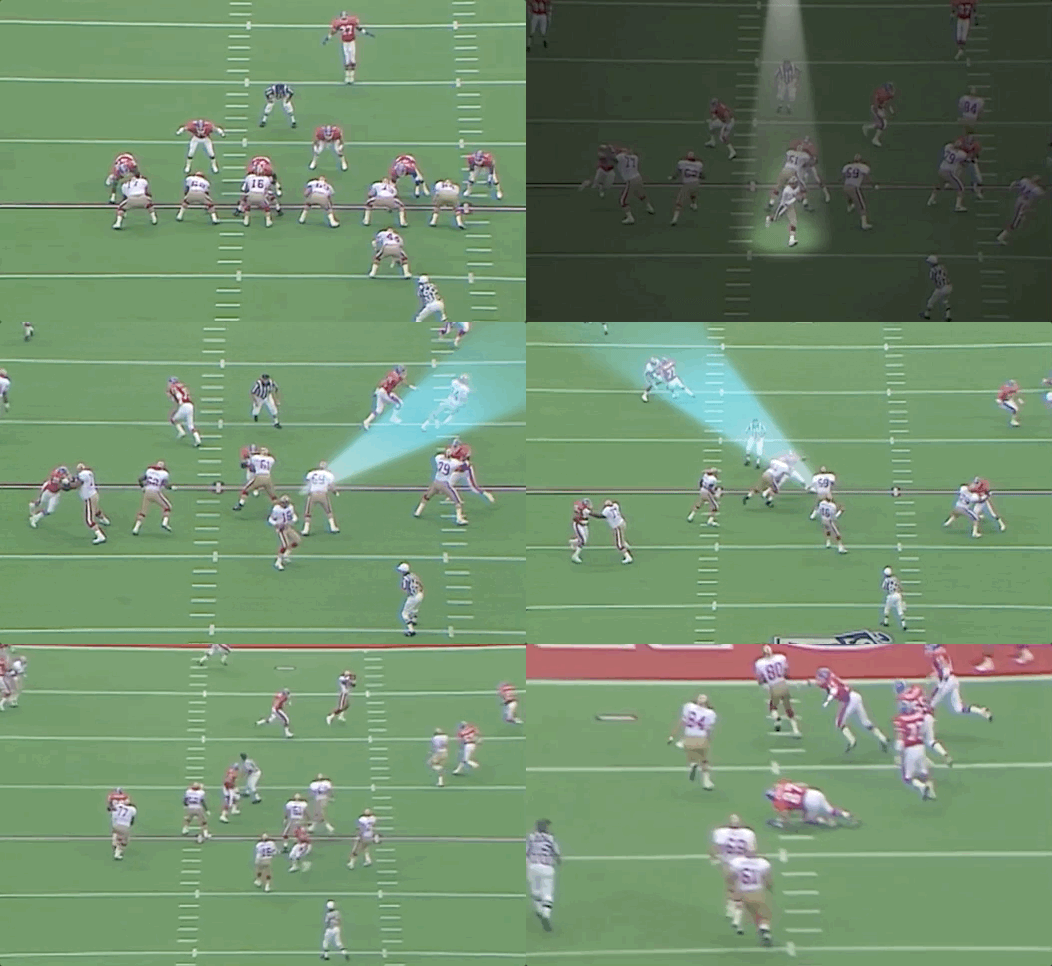
Then you have phase three, and that is after the play breaks down or after you’ve gone through all of your reads and you need to get outside the pocket, make something happen with your legs, either running for a first down or scrambling to buy time and then finding a receiver on a scramble drill.