

There is no route concept that puts more vertical stress on a defense than Four Verts. While the core play design is 4 go-routes or verticals, as the name suggests, it can be run in a variety of ways.
Receivers can have different options based on the coverage, or the play can be called in the huddle with different tags, changing a specific route or two for different situations.
This makes it a versatile play that can be called against just about any coverage.
Dive into over 90 breakdowns like this by getting a Founding Member subscription
and accessing our Playbook. We’re currently offering 25% off the Founding Member sub!
Most would probably argue that the ideal coverages to call it against are cover-3 and cover-2 since there aren’t 4 deep defenders to account for the 4 verticals. That doesn’t mean it can’t be effective against cover-4 though (more on that in a bit).
At the end of the day, the play attempts to target a deep safety in the middle of the field and put him into conflict by creating a 2-on-1 (2 verticals for one defender).
But, of course, if the quarterback loves a matchup on the outside, he always has the option to target it.
Let’s take a look at four verts vs. cover-3 first.
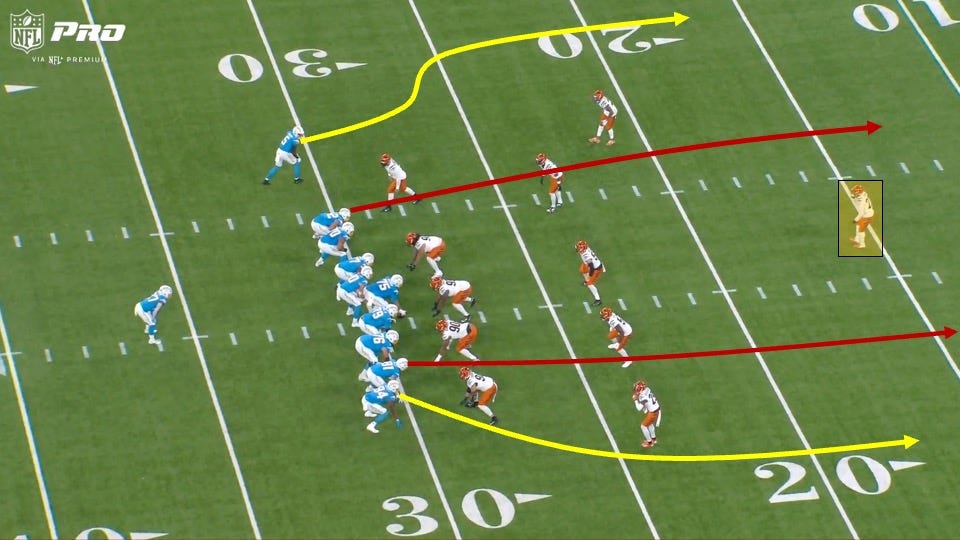
In cover-3, there are just 3 deep defenders for the 4 vertical routes. The safety in the middle of the field is the defender to target since he is put into that 2-on-1 conflict by the inside vertical routes:
Most teams don’t love to play cover-3 if they see a formation that can clearly threaten four verts. So offenses sometimes try to get defenses into cover-3 by aligning with big personnel and running formations before attacking vertically.
In a game between the Chargers and Bengals in Week 11 of the 2024 season, the Chargers did that brilliantly.
L.A. came out on first down in “13” personnel (1 RB, 3 TEs) and a condensed formation. It was a run look, which induced Cincinnati into cover-3:
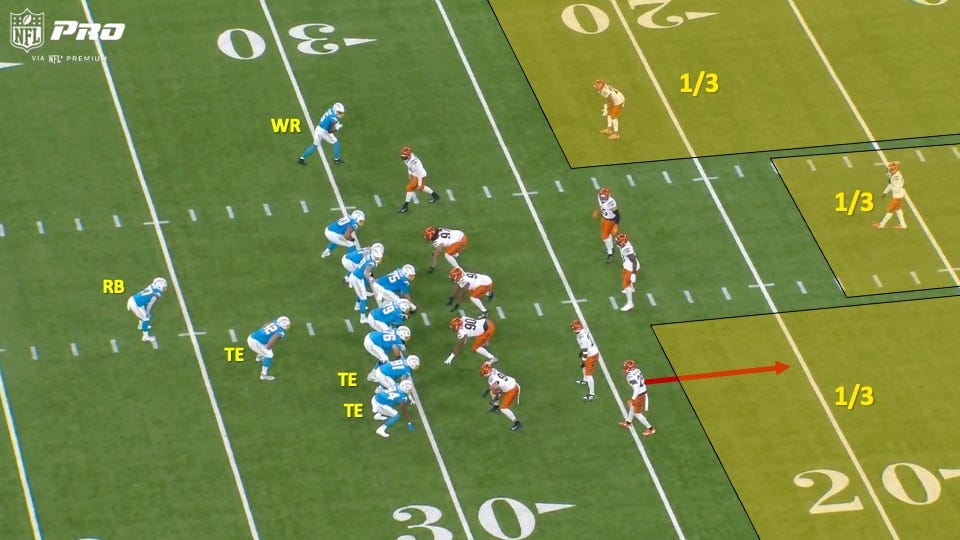
L.A. then motioned to a 2x2 formation and called four verts, which the Bengals were likely not anticipating out of this personnel grouping and formation.
Against cover-3, the quarterback can either read that deep safety, or if he has a particular receiver inside that he prefers to target, he can move the safety with his eyes.
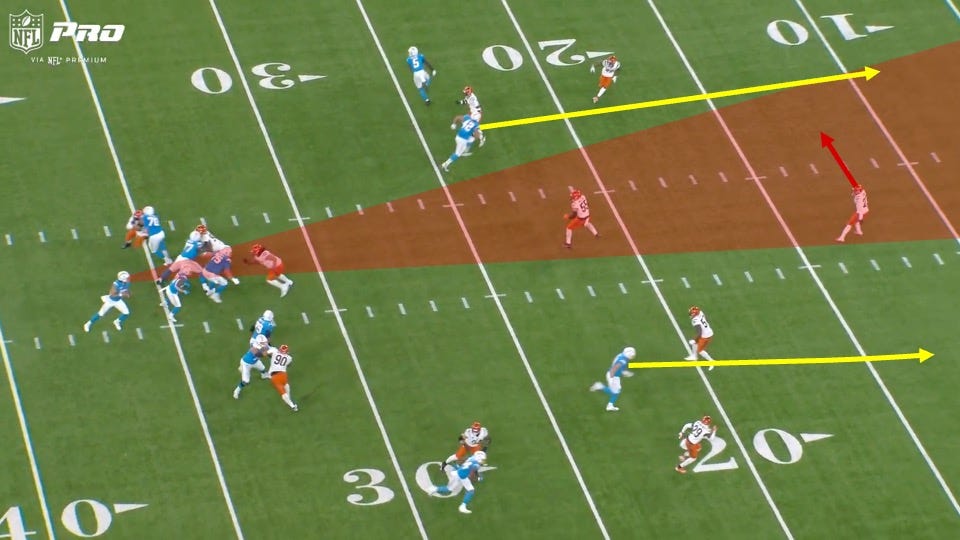
Here, Herbert did a great job of getting his head around quickly off of the play-action and then looking left to move the safety. That created just enough of a window for him to deliver this ball to tight end Will Dissly down the right seam:
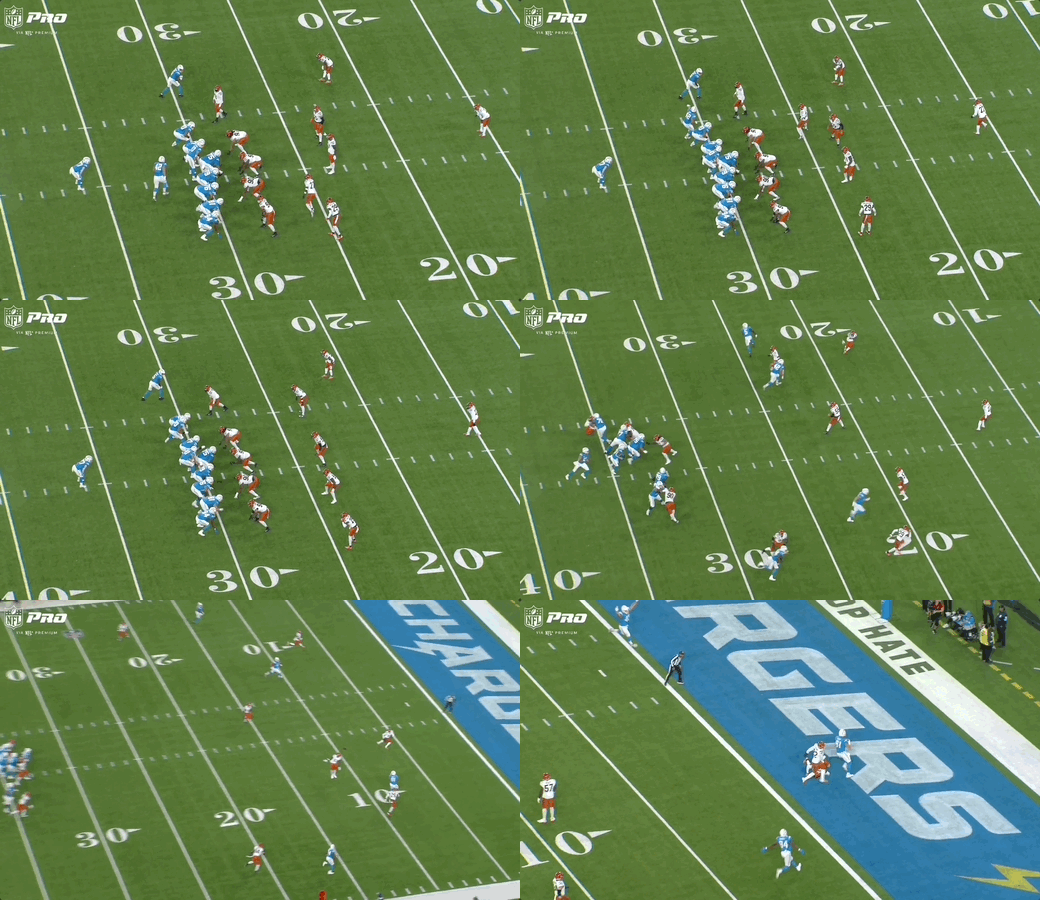
Below is another version of the same idea.
This was from a 2019 game between Bruce Arians’ Buccaneers and the Colts. This was a 2nd-and-1 and the Bucs were in “12” personnel (1 RB, 2 TEs). They aligned in a 2x2 formation with 2 wide receivers to the right and 2 tight ends to the back side.
The defense was once again induced into a cover-3 look. The deep safety cheated to the 2 wide-receiver side since they were the more likely vertical threat. So quarterback Jameis Winston targeted his tight end to the left for a big gain: