

Below, I’ve posted the transcript of the most recent Football Film Room podcast and included clips of the plays I talked about in the episode.
Feel free to read the transcript on it’s own or use it (and the plays I included) to follow along with the podcast to get more context for what I’m talking about.
In this episode, I discuss the following:
What Tony Dorsett Did for the 1977 Cowboys
Jeremiyah Love Breakdown
Why the Cardinals Make Sense
Why the Titans Make Sense
Why the Giants Make Sense
The Dexter Lawrence Situation
Kirk Cousins to the Raiders
Here is a direct link to the podcast, and below that you can find the transcript and plays:
Can Jeremiyah Love be what Tony Dorsett was to the 1977 Cowboys?

In episode #26 of The Football Film Room Show, I go back to 1977 to talk about the ways that Tony Dorsett expanded what the Cowboys could do on offense and how that is similar to what Jeremiyah Love can do for the team that drafts him.
The Football Film Room Show - Episode #26 Transcript
Welcome to the Football Film Room Show. I’m Nick Kehoe, and we’ve got another great episode for you today.
We’re going to talk about Jeremiyah Love, do a deep dive into his game, tell you which team should be interested, and tell you why, quite frankly, you can take your positional value arguments when it comes to Love and throw them out the window.
But before we do any of that, I want to go back to 1977 and talk about the Dallas Cowboys.
What Tony Dorsett Did for the 1977 Cowboys
Now, back in the 70s, that was the era of Tom Landry, Roger Staubach… The Cowboys were one of the best teams in the NFL. Arguably the best team in the NFC throughout that decade.
They had won a Super Bowl in 1971. They’d been to three Super Bowls by the time that 1977 had rolled around. But in the previous two seasons, 1975 and 76, they had lost the Super Bowl to the Steelers, and then they lost in the divisional round to the Rams.
And both times, their feeling was that the run game, that was kind of the culprit. It just didn’t have enough there.
So in the 1977 draft, they traded three picks in order to take Tony Dorsett. Now, Dorsett was the Heisman Trophy winner out of Pitt, and he was a game changer at the running back position. He had the ability to break off big runs, create those explosive plays that the Cowboys felt they were lacking:
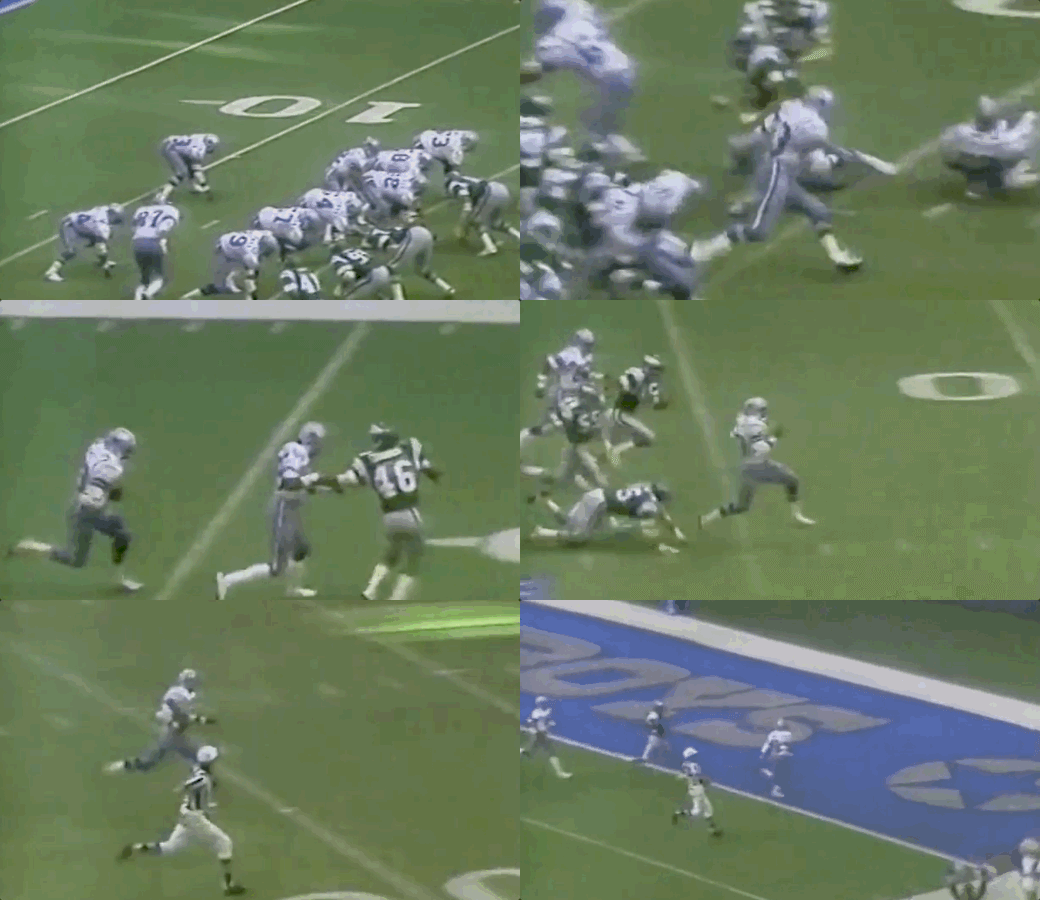
So they took him, they brought him in, thinking he could change the complexion of their team.
But Dorsett didn’t enter that season as the starting running back. Part of that was he just had to earn his way. That’s how the Cowboys did things.
But another big reason for that was that the Cowboys, Tom Landry, the way he did things, the way they designed their plays, you were supposed to do what you were told. If a run play was designed to go to the left and hit in the B gap, that’s where you as a running back were supposed to go. But Tony Dorsett didn’t run that way. He ran to what he could see, in his own words:
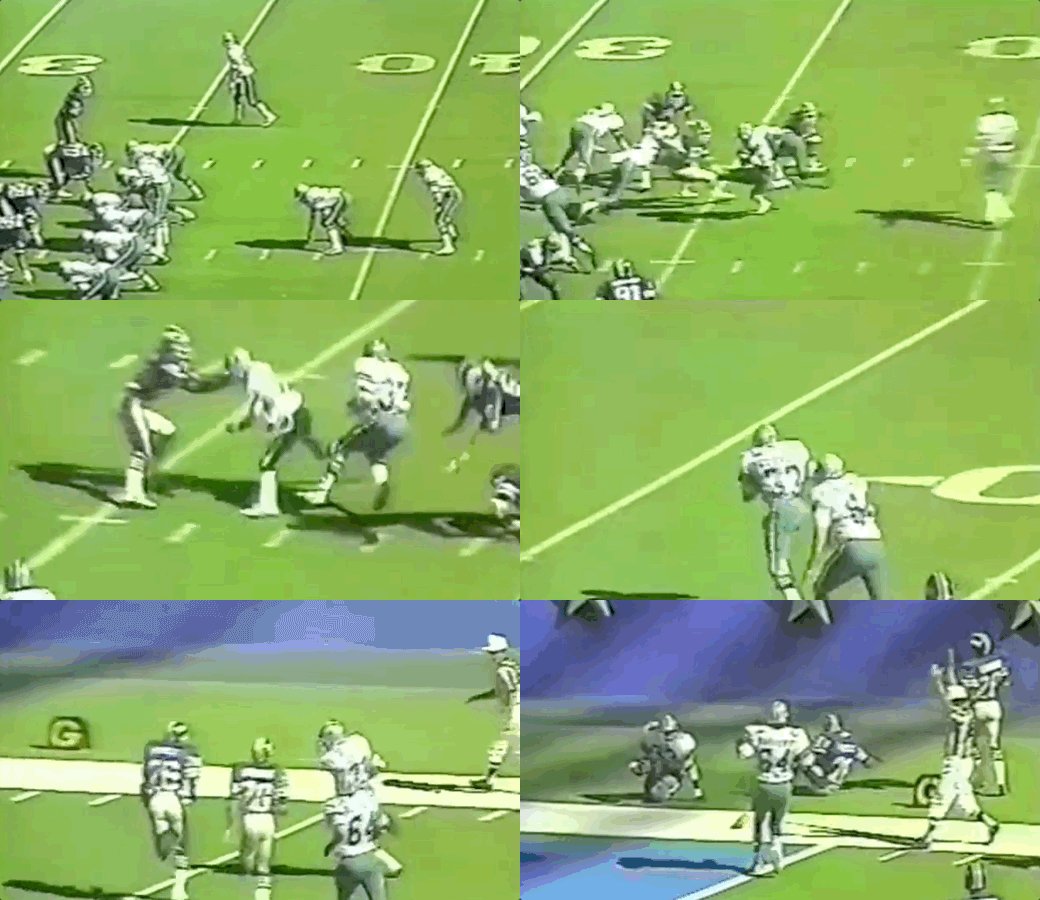
And sometimes that meant that even though the play might be designed to hit the B gap to the left, the true opening is going to be cutting it back to the other side.
And there was a point early in that season, about a month in, where the Cowboys were getting ready to play the Cardinals. And in practice that week, going against a scout team, Dorsett took a run and then cut it back behind the center, and he got chewed out by his coaches.
“The hole will never break back behind the center!” They told him. “Do not cut it back. Run where the play is designed to go.”
Again, the Cowboys were machine-like in their approach.
And so, of course, Sunday rolls around. They play the Cardinals. Dorsett’s in the game. The same play that was called in practice where he got yelled at by his coaches. The same play is called, and Dorsett takes the ball, starts where the play is designed to go, and then he sees an opening where he can cut it back, just like the coaches said wouldn’t happen in an actual game, and took it to the house from 77 yards away.
Cowboys would go on to win that game. And according to Dorsett, that very next day, Tom Landry came in and he told his offensive linemen, hey, Dorsett runs differently. What we’re going to have to do is just get a hat on your guy, stay on him as long as possible, and he’s going to run to what he sees. He’s going to run to daylight.
And the move paid off. The Cowboys went from 12th in rushing yards per game the year before to 4th in 1977. Tony Dorsett would go on to win rookie of the year, and the Cowboys would win the Super Bowl.
In fact, the Cowboys would make it back to the Super Bowl the next year as well. And on top of that, they’d go on to play in five NFC Championship games in Dorsett’s first six years. He ended up in the Hall of Fame.
But the big point here is that the Cowboys thought they had a way of doing things schematically. They thought that it made the most sense to say, hey, here’s where the play is designed.
Doesn’t matter what your name is, who you are as a running back, you’re going to run it the same way as everyone else. And then Dorsett kind of opened their eyes, kind of made them realize, you know what, we can expand what we’re doing if we let him run, if we let him use his special talents.
He can add on to our offense. We can do things we didn’t even plan to do. He can make adjustments within each play to make that play work better than it would have if we just ran it exactly as designed.
But the reason I tell you that story is because Jeremiyah Love can do the same thing for whatever team he goes to.
Breaking Down Jeremiyah Love
Now, he’s a different runner than Tony Dorsett, but his ability to expand an offense, to allow an offense to do something that other teams just aren’t doing, or to allow a team to do things that they didn’t even think that they could do or they didn’t know that they wanted to do, his ability to do that is similar to Dorsett’s. The value, the impact he can have on a team can be the same as what Dorsett’s was.
Love is a special, special player. There’s really nothing he can’t do as a running back.
He can fit into any scheme. You can run zone with him, gap, power, duo, whatever the heck you want:
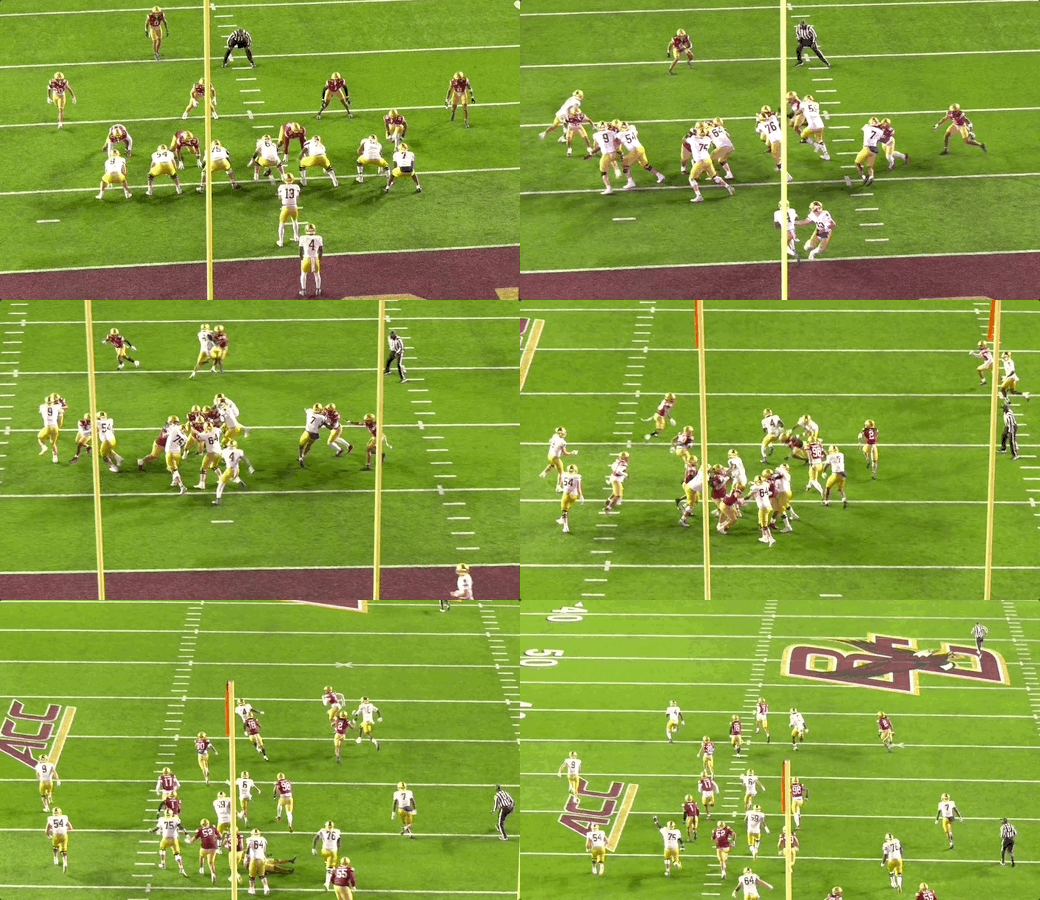
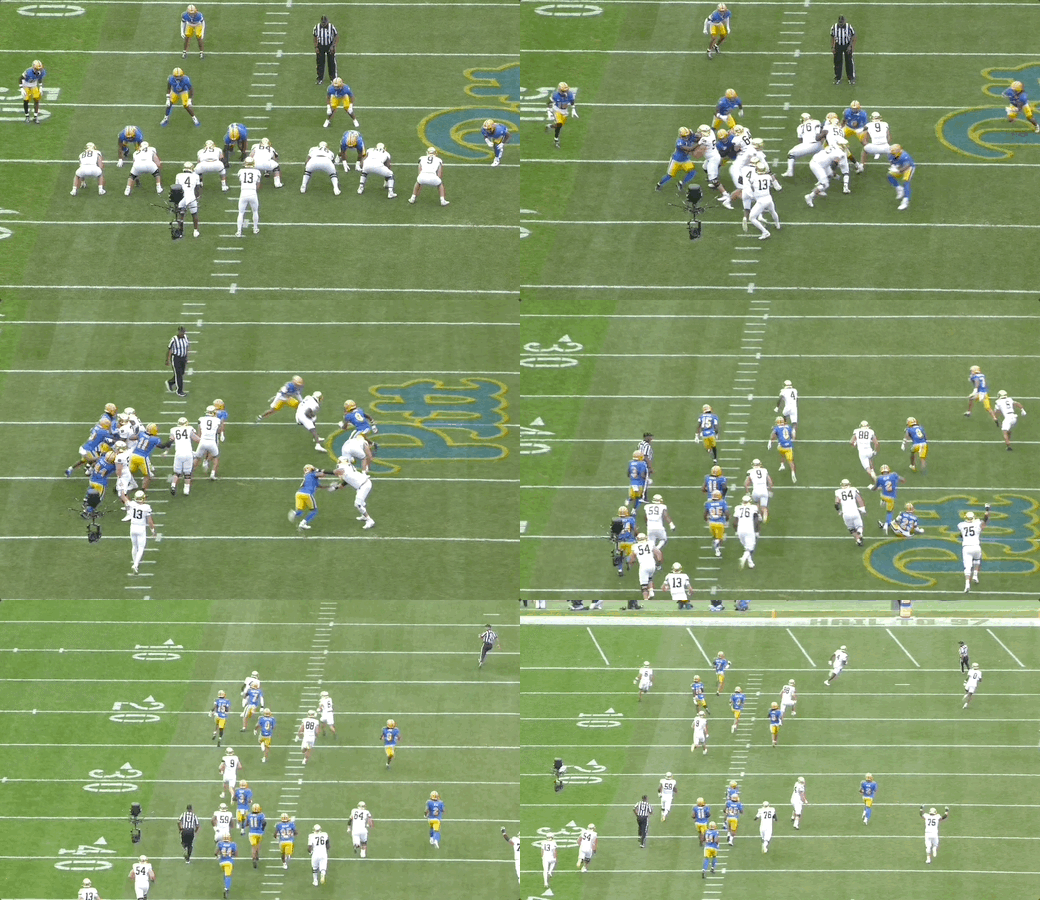
He’s good in the passing game. You can design plays for him, screens, swing passes… Get him the ball in space and he’ll make defenses pay:
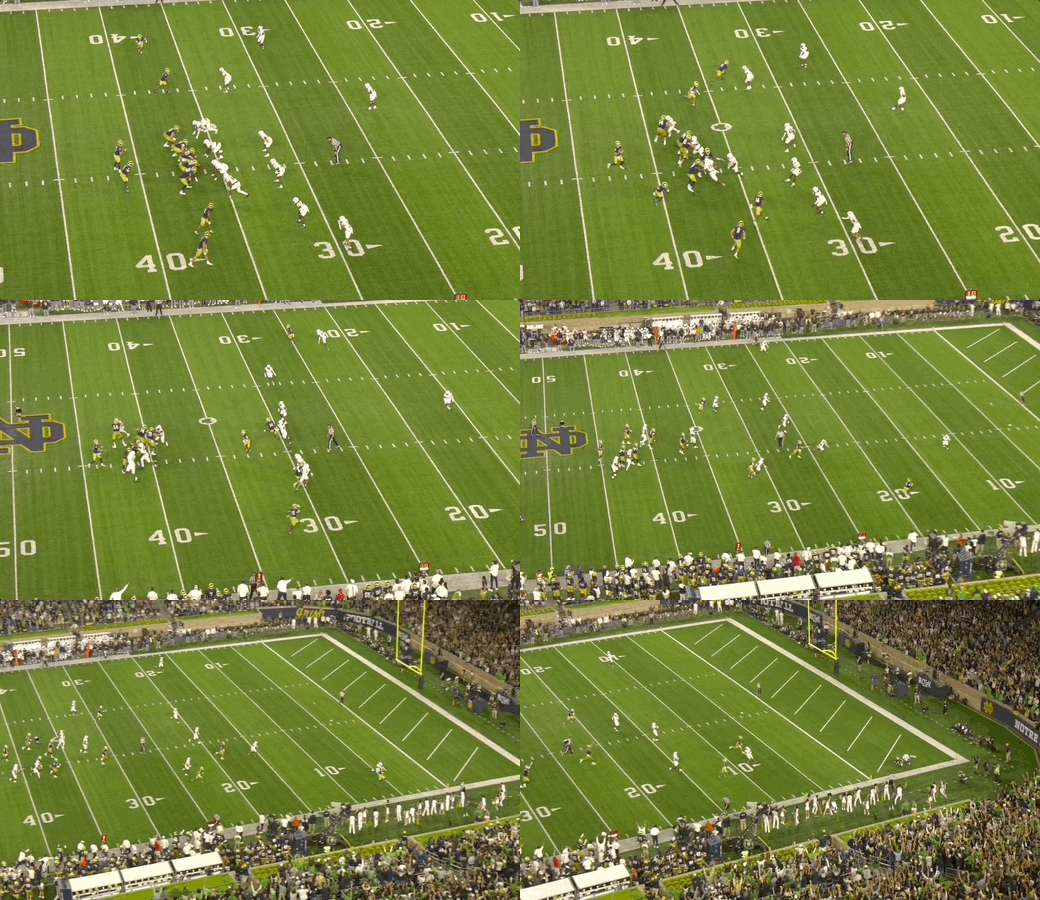
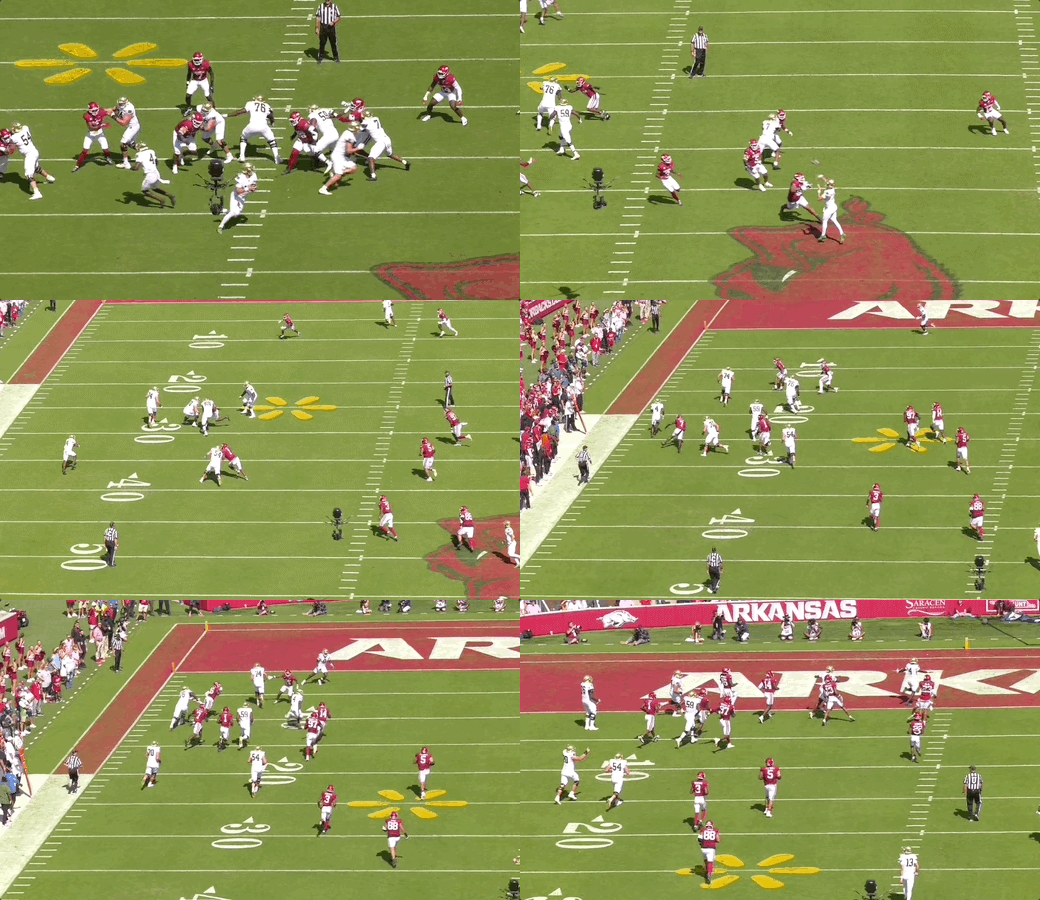
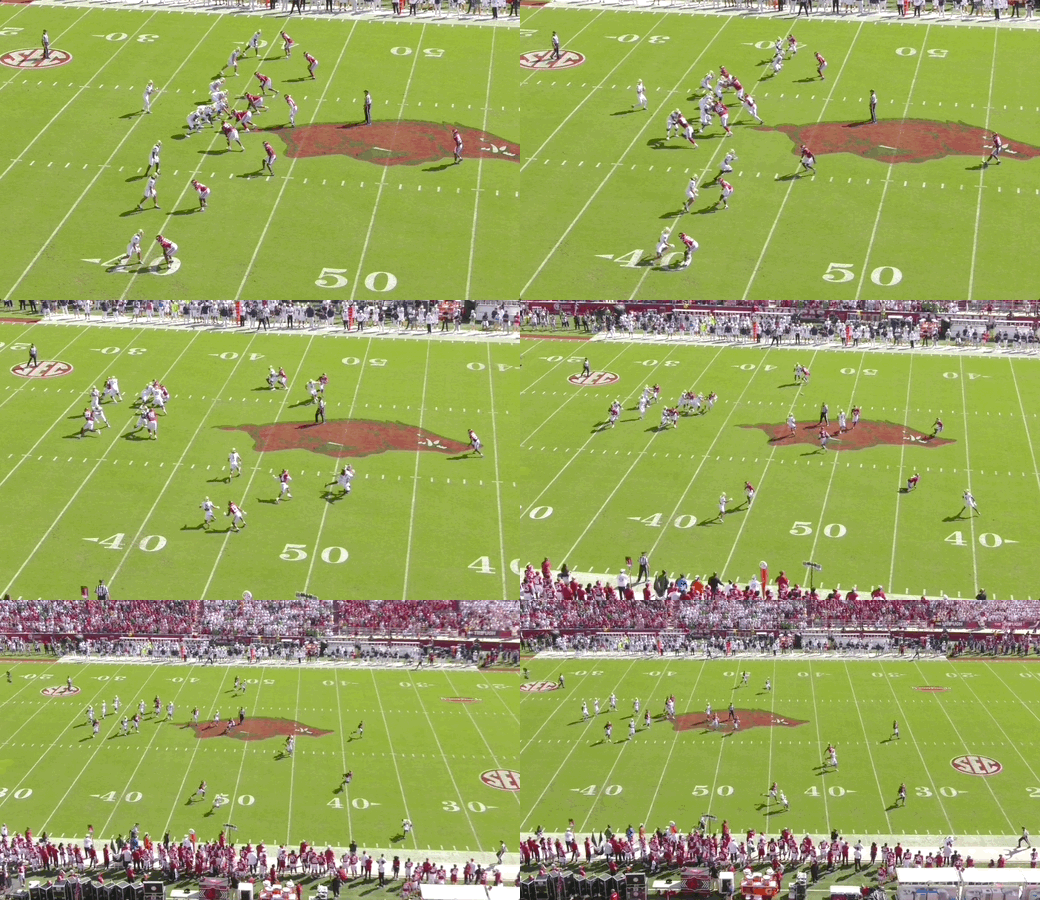
Even more impressive though is that you can line him up in the slot, you can line him up on the perimeter, and he’s got really good receiving skills.
There were times when I was watching him on film and I’d see him aligned in the slot and I couldn’t tell the difference between him and a typical slot receiver. Didn’t look like a running back out there:
When he has to stay in and help out with protection, he’s also really good there. Saw him deliver some punishing blows to safeties and linebackers, scan coast-to-coast, pick up blitzers:
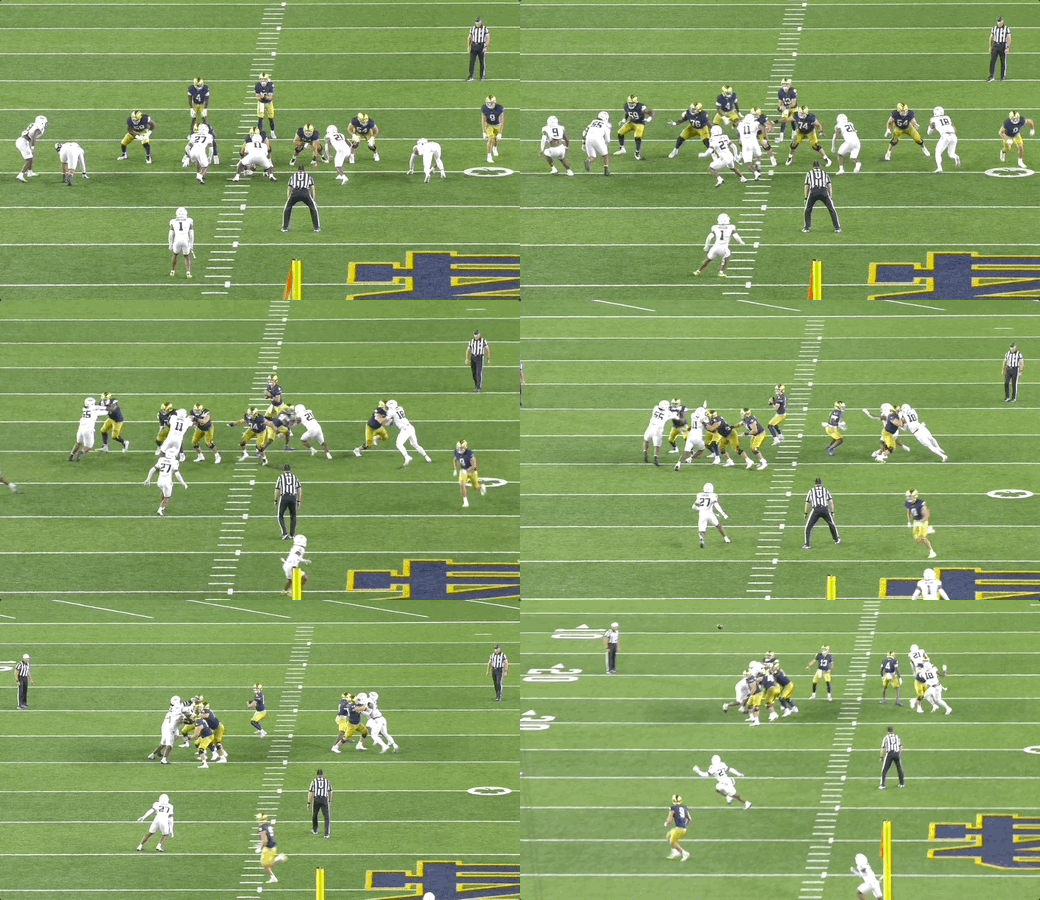
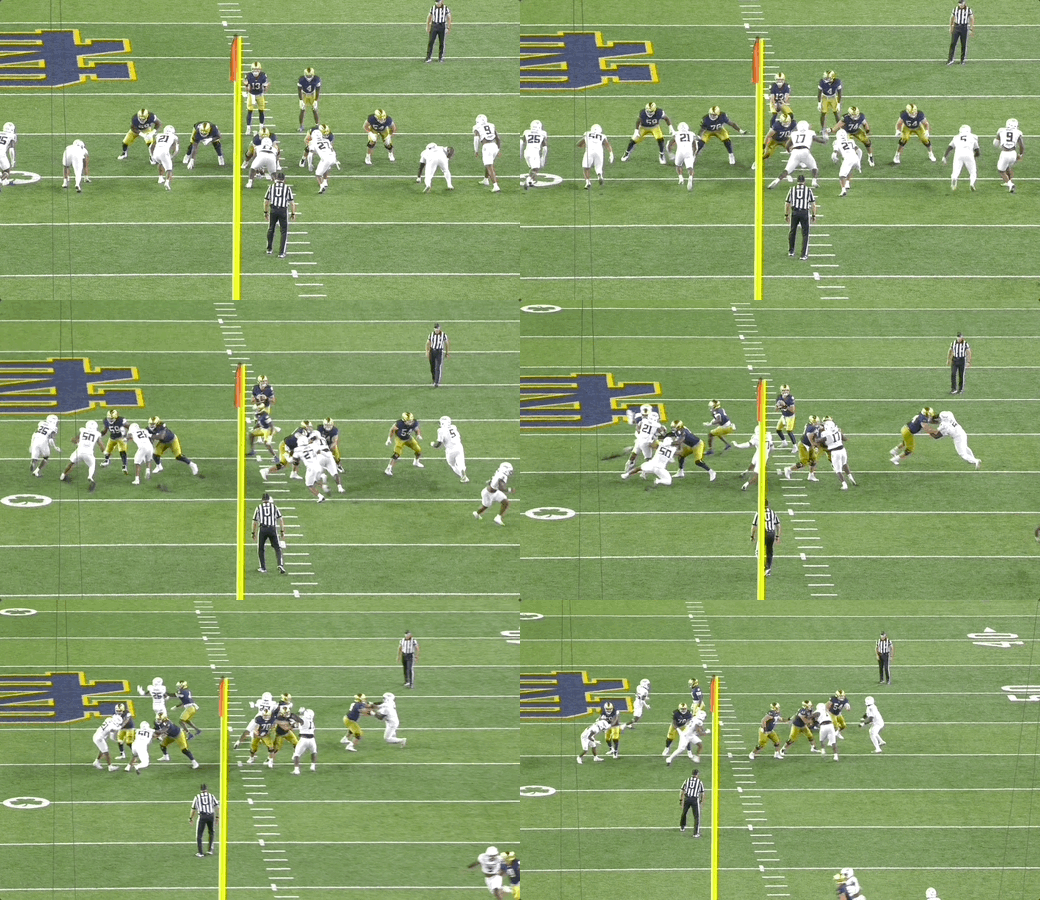
Obviously, you probably want him having the ball in his hands or getting out into routes, but if he needs to stay in and protect, he can absolutely do that. But he’s a versatile, versatile running back.
Now, as a runner, the things that make him special are that he’s very quick twitch. He’s got that 4.36 40-time. But really one of the most impressive things about him is that he can be running full speed and then cut on a dime. He can change directions when the defense isn’t expecting it: