

The best way I can describe Shedeur Sanders’ performance during his rookie season is that his playing style resembled a young Josh Allen. Only, he doesn’t have Allen’s talent.
The result was an ugly first 7 starts of his career. Sanders completed just 56.6% of his passes for 6.6 yards per attempt. He threw 7 touchdowns, 10 interceptions, and played to a 68.1 passer rating.
What was behind those poor numbers? A variety of issues.
The biggest one during his rookie season was the same issue he had in college. He was too slow with just about everything he did.
His drops were too slow. His processing was too slow. And he often took too long to get the ball out of his hands after making the decision to throw, giving defenders too much time to react.
All of this contributed to Sanders executing without a good sense of timing in the passing game. And that’s a problem, because for Sanders to succeed at the NFL level, he has to be able to get the ball out to the right place at the right time.
He doesn’t do that consistently, though. Too often, he abandons plays or opts for sandlot football.
No quarterback can survive by playing that way, although some are talented enough to get away with it more than others. Sanders is not.
Because there was not enough urgency to the way he executed from the pocket, the Browns couldn’t generate anything consistent in the short-to-intermediate passing game with Sanders under center last season.
They had to lean on screens to get regular production in the passing game, for instance. In fact, more than 18% of Sanders’ passing yards came from screens according to Pro Football Focus. That was the highest amount by a wide margin among qualified QBs (the next closest was around 12%).
On top of all this, his game management and decision making were not NFL caliber last year. He made too many YOLO throws, took too many sacks, and simply did not manage the situations of the game.
2026 is likely a gap year at quarterback for the Browns. They didn’t make any significant moves at the position this offseason and appear to be gearing up for the 2027 draft class.
They did a nice job during this year’s draft of building up the offense around the quarterback to set up whoever ends up being their future for success.
Despite all that, and despite how poorly Sanders played during his rookie season, it would make sense for them to give him the chance to play and see what he can do in Todd Monken’s system this year.
Yes, Sanders has a long way to go to be an effective NFL quarterback. And the odds of him being Cleveland’s future are not great. But wouldn’t you like to find out for sure if you’re the Browns?
They’d be about two years ahead if they already had their franchise QB right now instead of waiting to take one in 2027, living through his growing pains during his rookie season, and then hoping he develops into a great quarterback in 2028 and beyond.
On top of that, we’ve seen plenty of QBs make a jump from year 1 to year 2. They figure out where their deficiencies are and begin to match their play to the speed of the NFL game.
I’d rather see the Browns give Sanders a shot to see what he can be than turn the keys over to an injury-riddled Deshaun Watson, who’s played just 19 games since 2020. There is no chance he’s the future in Cleveland after this season anyway, so what’s the point?
While there is still only a small chance that Sanders is the future, the Browns should seek to find that out for sure. At very least, they can determine if he’d be an effective back-up or build up some trade value in him.
Now let’s dive into his 2025 performance.
Too Slow with Everything
As mentioned above, at the root of Sanders’ issues is the lack of urgency with which he plays. You could see it in his footwork and processing below.
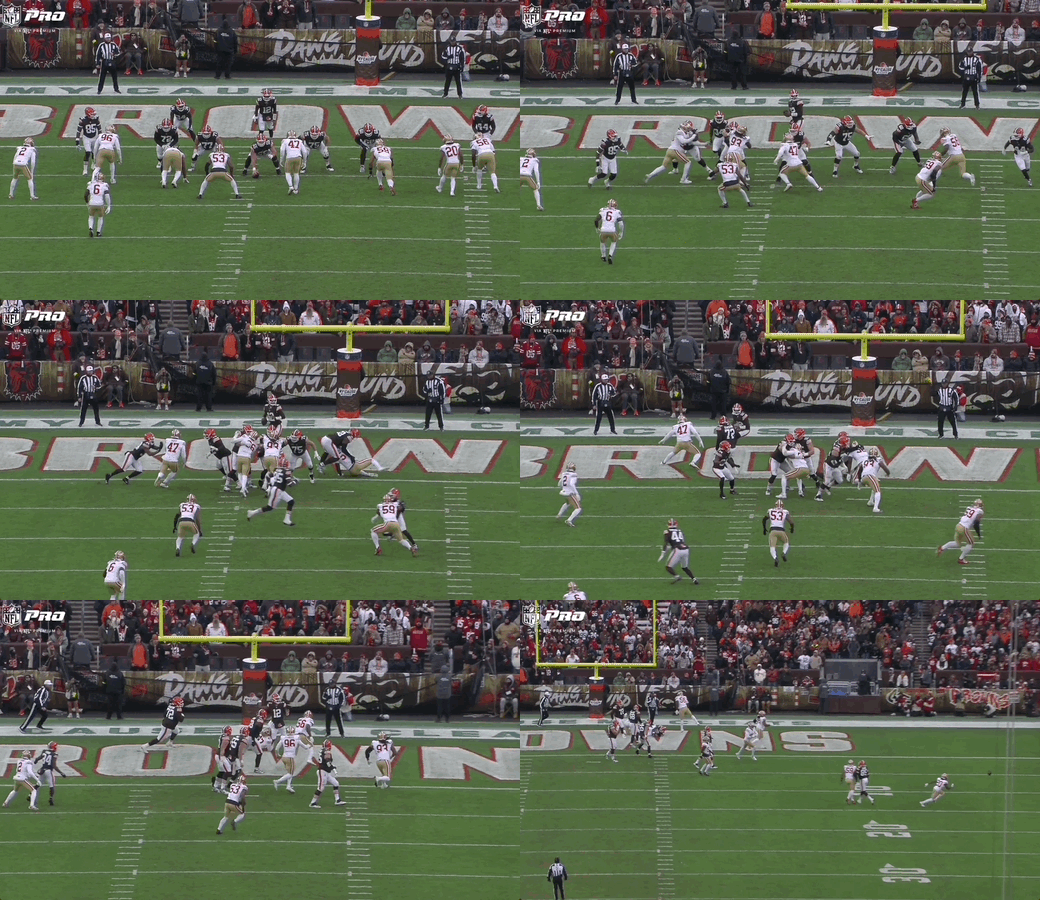
This was a 3rd-and-9 against the 49ers with the Browns backed up deep in their own territory. Sanders likely had the out from the slot to his left. But if he didn’t like it, he could have dumped the ball off to the shallow crosser:
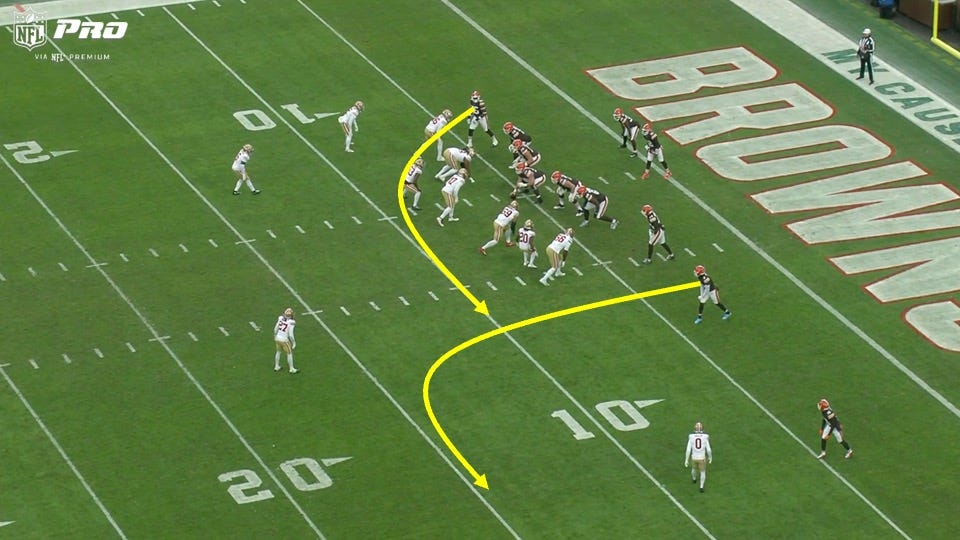
He took neither, nearly got sacked, and ended up throwing the ball away:
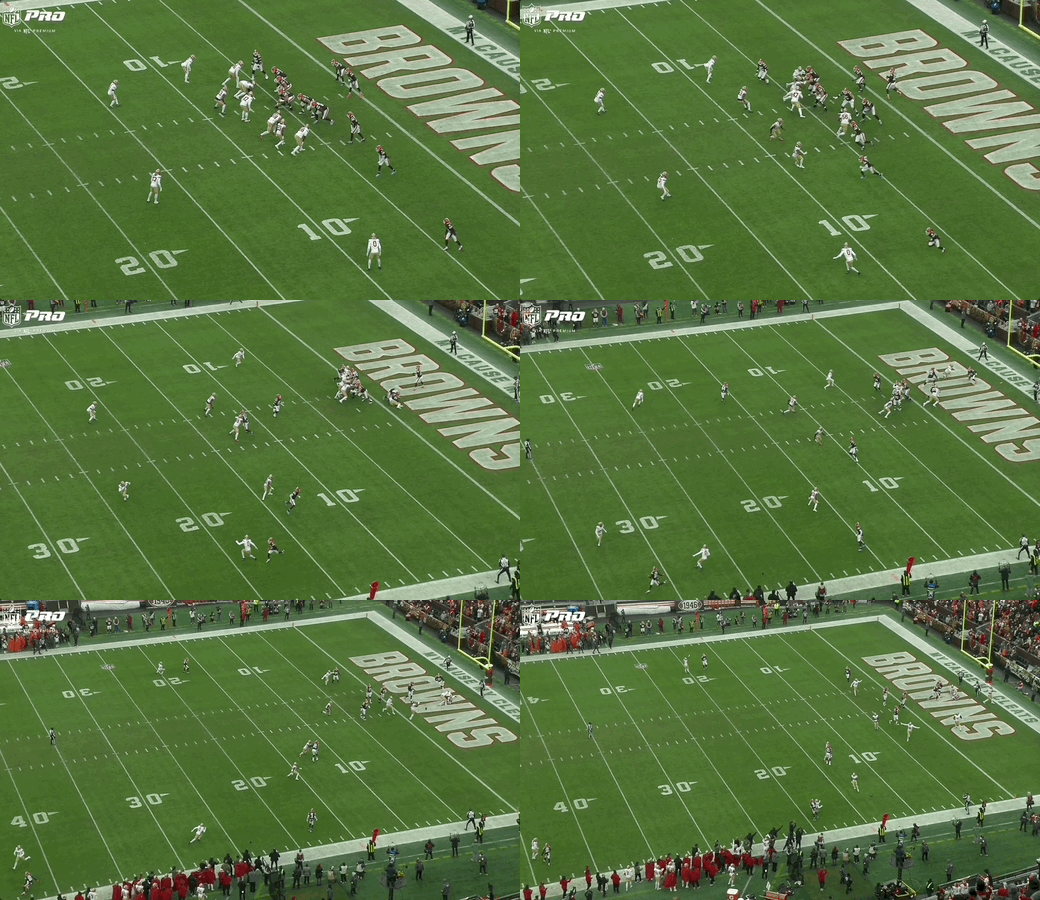
The issue here was that Sanders was too slow to set up (he drifted at the top of his drop and never actually set his feet). That made it so he wasn’t ready to throw the out-route when it would have been the right time to release the ball:
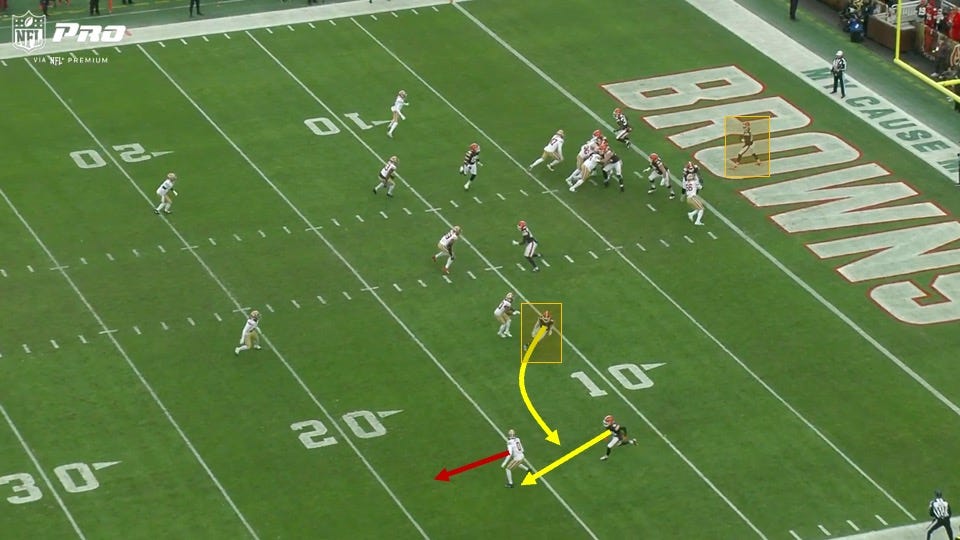
I understand if he was concerned that the corner wasn’t getting depth fast enough and would potentially sit on the out-route. But Sanders could have then come down to the shallow crosser, who was open:
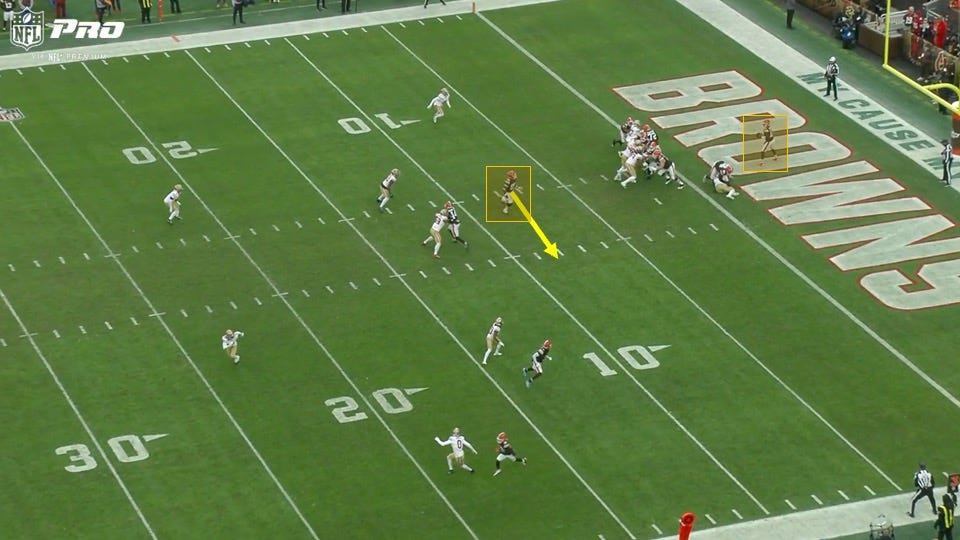
He never got to it because he still had his eyes to the outside and was taking too long to make a decision. When he did finally come off of it, he didn’t even look at the crosser. He instead tried to lean on his scrambling ability, which took him into pressure and led to the unsuccessful play:
Here’s another example of Sanders having no urgency with his drop. The receiver he was targeting was wide open if Sanders had just set up and delivered the ball a split second earlier.
Instead, because he was late, he had to account for both the underneath defender and safety to that side and slow the receiver down with his throw. That impacted the accuracy of this ball:
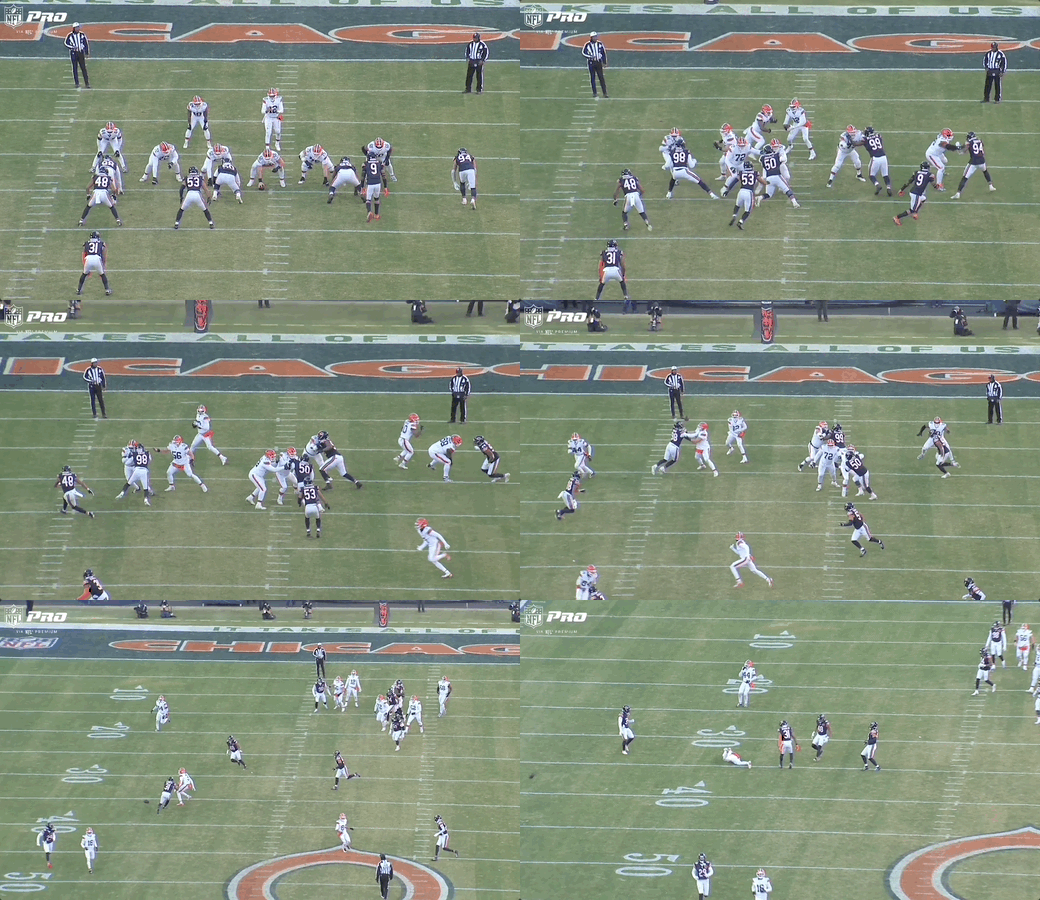
This was wide open but ended up being an incompletion all because of timing.
On this next play, the Browns used play-action, a pulling guard to the right, and Sanders used a mini-roll in that direction as well. The defense moved with him in response, and that opened up a huge void at the intermediate level for the #2 receiver to his left.
He was WIIIIIIDE open. But Sanders didn’t throw it despite a pristine pocket: